Jun 30, 2008

"Remember Chek Jawa": an interview with director Eric Lim

Remember Chek Jawa, an independent film which took about six years to produce, shows an alternative side of urban Singapore and the congregation of the human spirit to save what is left of our natural environment.

Once destined to be put up for reclamation, Chek Jawa has won the hearts of people from all walks of life and has since averted it’s terrible fate. Through their undying determination and great efforts, the film embraces the power of human will and how one person can make all the difference. Eric Lim talks more about his experience.

Find out Eric Lim's thoughts about questions such as...

In the process of making this documentary, what were some of the difficulties you faced?

In the film, Mr Joseph Lai mentioned that “not many Singaporeans took the effort to go and find out things” which is partly the reason why Chek Jawa was only discovered recently, despite so many “nature groups and academics”. He went on to say that there is “something missing”. What do you think is this missing factor in Singapore society?

How has making this film changed you? In terms of your perception on conservation and ‘the human spirit’.

Full interview on the Sinema Old School website

See also the Remember Chek Jawa website for more about the film.

Thanks to an alert on the Singapore's Heritage, Museums & Nostalgia blog

More links

Shell is looking into a new petrochemicals facility

How big will the facility be? "to be economic, the new SMPO investment should ideally be as large as Shell Chemical's world-scale, US$500 million Ellba Eastern joint venture with Germany's BASF on Jurong Island".

Where in the world will it be located? "Singapore is being considered as the investment site, but has to compete with others in the Middle East and Asia".

If in Singapore where will it be located?
"A factor favouring Singapore for the SMPO investment will be the availability of feedstocks like ethylene, propylene and benzene from Shell's new US$3 billion petrochemical cracker which is currently being built and scheduled to start operations in late 2009 or early 2010. Having an integrated manufacturing hub will be an advantage in the competitive SMPO market".

This cracker is probably the one on Pulau Bukom, which next to Pulau Hantu and near Cyrene Reefs.

What is the output of the facility? "Chemical intermediates used to make final products such as polystyrene containers and rubber soles."

Shell seeking JV partners for new plant
Singapore being considered for the SMPO facility
Ronnie Lim, Business Times 30 Jun 08;

SHELL Chemicals is talking to potential partners for a significant new styrene monomer/propylene oxide (SMPO) facility - expected to cost at least US$500 million - which could be built in Singapore, a senior executive told BT.

Its general manager for SMPO & derivatives, Fang Yea-Yee, said that the strong Asia-Pacific demand for SMPO - which are chemical intermediates used to make final products such as polystyrene containers and rubber soles - underpins the project.

'A lot of work is going on, and we are in discussions with possible joint venture partners,' he said, elaborating on news that first emerged last month of the planned SMPO investment.

Iain Lo, its vice-president, ventures and developments for the Asia Pacific/Middle East, had told BT in May that a 'decision is expected soon' on the project.

Singapore - one of Shell's main refining and petrochemical hubs - is being considered as the investment site, but has to compete with others in the Middle East and Asia.

While Mr Lo did not give project details, he indicated that to be economic, the new SMPO investment should ideally be as large as Shell Chemical's world-scale, US$500 million Ellba Eastern joint venture with Germany's BASF on Jurong Island.

Ellba has a production capacity of 250,000 tonnes of PO and 550,000 tonnes of SM.

Mr Fang declined to say which companies Shell Chemicals was trying to get aboard its latest SMPO project, and whether it was considering different joint venture partners depending on the site chosen.

A BASF spokesman contacted by BT earlier last week said that it was not in discussions with Shell at this point of time on the latest SMPO investment.

A factor favouring Singapore for the SMPO investment will be the availability of feedstocks like ethylene, propylene and benzene from Shell's new US$3 billion petrochemical cracker which is currently being built and scheduled to start operations in late 2009 or early 2010.

Having an integrated manufacturing hub will be an advantage in the competitive SMPO market, Mr Fang told a petrochemicals conference in Bangkok recently.

'Shell believes the strong growth in Asia-Pacific demand for both styrene and propylene oxide will continue to create attractive opportunities for new SMPO investments,' he said.

Overall, regional growth remains robust - especially with China remaining the major global growth engine for styrenics - and Shell sees this trend continuing for the long-term, he added.

full article also on the wildsingapore news blog

More about petrochemicals and our southern islands.

Nature guides may soon need to be certified

From the article below, main points of the certification move are:

Why? "to eliminate the risk of shoddy tours and ill-informed guides", "to standardise the quality of information" among the rapidly increasing number of guides due to "rapidly growing number of eco-tourists". "This is meant to be a comfort to the public who want to engage a service, so they will know that the person doing the guiding has a consistently high level of knowledge".

Applies to whom? "all those conducting eco-tours will have to go for training".

Any exemptions? "will not apply to teachers and their students, or people who want to share what they know with friends".

For which locations?
"apply to the roughly 300 green spaces under the jurisdiction of NParks " including "Bukit Timah Nature Reserve, the Sungei Buloh Wetland Reserve and Chek Jawa in Pulau Ubin".

What are the details?
"The details of the programme have not been established", said Dr Leong Chee Chiew, NParks chief operations officer

How much will certification cost?
NParks "has not come up with the cost of the proposed training programme, nor has it decided if there will be a difference in what professional guides and volunteers will have to pay for training". "The fee would be more than $100 but would not be onerous. Subsidies will be made available to locals".

What's next? "
Consultations will be held with eco-guides later this year before its plans are cast in stone"


Nature guides may soon need to be certified
Proposed NParks rule designed to raise quality of guides
Shobana Kesava, Straits Times 30 Jun 08;

BY THE end of next year, all nature guides who show local and foreign tourists around Singapore's parks and reserves could need a certificate from the Government.

The proposed rule, designed to eliminate the risk of shoddy tours and ill-informed guides, would apply to the roughly 300 green spaces under the jurisdiction of the National Parks Board (NParks).

The list includes some of Singapore's biggest and most popular parks, such as the Bukit Timah Nature Reserve, the Sungei Buloh Wetland Reserve and Chek Jawa in Pulau Ubin.

NParks chief operations officer Leong Chee Chiew said: 'We would like to standardise the quality of information given out to those who are interested in nature.'

NParks said a big reason for its proposal was the rapidly growing number of eco-tourists visiting its parks and reserves. The demand has prompted a need for more people - both volunteers and professionals - to get into the guiding game.

NParks said there are 1,600 registered volunteer guides, but it is unclear how many are active. There could be hundreds of other private volunteers, according to some estimates.

Most guides are nature lovers or members of conservation groups who offer free tours. But there are a handful of professionals who charge about $100 per hour for excursions.

Eventually all those conducting eco-tours will have to go for training, though the details of the programme have not been established, said Dr Leong.

NParks' director of industry, Mr P. Teva Raj, said this will not apply to teachers and their students, or people who want to share what they know with friends.

'This is meant to be a comfort to the public who want to engage a service, so they will know that the person doing the guiding has a consistently high level of knowledge,' he said.

Seven experienced nature guides who spoke with The Straits Times agreed that training would be valuable.

But they were riled by the idea that they might require accreditation. Some see it as an insult after decades of promoting Singapore's natural heritage, while others think it goes against the spirit of volunteerism.

A guide certified by the Singapore Tourism Board (STB), Mr Grant Pereira, 59, said: 'I don't see a reason for external guidelines. I am a certified guide by the STB, I am extremely good at the few guided tours I specialise in. Why is this necessary?'

It appears that not every eco-tourist needs licensed guides. Nature lover Nassera Guerroumi, 36, who is from France and came to live in Singapore two years ago, does not think certification is necessary beyond training in first aid.

'Why formalise it? People who do this love nature or they wouldn't bother sharing their passion. I don't need Latin names of plants, or someone talking all the time, I just want to be safe and know where to go to have an experience,' she said.

NParks has not come up with the cost of the proposed training programme, nor has it decided if there will be a difference in what professional guides and volunteers will have to pay for training.

Mr Raj, when pressed, said the fee would be more than $100 but would not be onerous. He said subsidies will be made available to locals.

President of the Nature Society of Singapore, Mr Shawn Lum, 45, said that, in principle, NParks' idea is excellent.

'It ensures that NParks, as a custodian of our natural heritage, has an idea of who are leading walks and if they're being done responsibly. The devil is in the detail which stakeholders would want to help the authorities pin down. But this is worth it,' he said.

Mr Raj said consultations will be held with eco-guides later this year before its plans are cast in stone.

SCHEME MAY BACKFIRE

'Some of the ideas like safety training are great, but I'm afraid the certification might become a barrier to volunteerism. Having to pay may discourage people and certificates cannot guarantee quality in content-delivery and style.'
VOLUNTEER NATURE GUIDE NOVEMBER TAN, 26

ROOM FOR IMPROVEMENT

'I've seen exceptional guides but I've also seen guides who allow tourists to stay close to a bird's roosting site for too long, not knowing such behaviour will prompt the birds to abandon the site. This does not help the precious wildlife we have left.'
WILDLIFE CONSULTANT SUBARAJ RAJATHURAI, 45

NParks to consult Australian institute on guide training scheme
Straits Times 30 Jun 08;

THE National Parks Board (NParks) has turned to an Australian tourism body to help it establish what information guides should know about Singapore's nature reserves.

Recommendations from the government-linked William Angliss Institute Specialist Centre for Tourism are likely to form the basis of a proposed NParks scheme to accredit guides.

NParks recently put 19 of its senior nature guides and staff through a week-long review by the Australian institute that tested their knowledge.

Guides had to demonstrate their skills in guided walks at the Singapore's new HortPark, and traditional haunts such as Sungei Buloh Wetland Reserve, the central catchment area and the Bukit Timah Nature Reserve.

NParks' senior outreach officer, Ms Karen Teo, 35, went through the test, the results of which are expected in the next few weeks.

She trains some of the 1,600 volunteers registered with NParks.

'I've not really had formalised training, so it was good to find out I was doing a lot of things right and that...I could do more to promote larger campaigns, for example, against climate change,' she said.

The Australian institute said shortcomings were spotted in areas of risk management, including how to handle someone with heat stroke.

When ready, Singapore's new accreditation programme will likely set a minimum standard of general knowledge for guides and require them to know first aid.

They will also have to understand how to minimise the impact of tours on the environment.


full articles also on the wildsingapore news blog

Jun 29, 2008

EnviroFest 2008: Day 2

EnvironFest continues to bring in the crowds on the second day!

At the Naked Hermit Crabs booth, Andy shares about the shores with a family interested in visiting. (We are overwhelmed by the huge interest in visiting)I grab a chance to visit some of the booths I missed yesterday. The friendly ladies at the Cat Welfare Society are doing incredible work for our community cats. My three cats came via their good work (including Tootsie the polydactyl cat), so I really appreciate what they are doing. Bravo!
And the equally hard-working folks at the Water Ways Watch Society who toil tirelessly to share the message on keeping our waterways clean.Here's one of their snazzy hard-hitting messages.The Raffles Museum Toddycats continue to get tons of 'business', with lots of attention on their specimens.Especially the pickled baby dugong, apparently the poor thing was inside its mummy when the Mama dugong was killed by a boat propeller. Tragic.Our marine heritage is also one of the Toddycats' key messages.Over at the NParks booth everyone was cheerful and enthusiastic despite the heat of the afternoon.Their kids' activity corner remained very popular.Alas, at the booth was displayed the remains of the cute baby colugo that was rescued in 2006 but which didn't survive the brutal attack on its mother by a thoughtless poacher.This is what it looked like when it was still alive and being cared for by NParks officers. Read more about the baby colugo on the For the Future of our Forest blog by the Central Nature Reserve volunteers.It's sad that our wildlife is not appreciated and are mindlessly killed.

Indeed, this was the message of the talk by Karen Teo of NParks this afternoon. That we have special Singaporeans that we don't know about. And that we should do our part to protect them.Lots of people came specially to listen to this afternoon's talks.And there was even one person who insisted on interrupting the talk to have another look at the Banded leaf monkey.And what a real treat it was to have Chay Hoon next up, sharing about our shores above and underwater, on behalf of the Hantu Bloggers.She shared not only photos but also video clips and had lots of interesting stories and facts to share with us.The kids were particularly fascinated by all the colourful photos!

The talk went smoothly, even though this grandpa walked right infront of the screen!It was a real special two days chock-a-block with happenings and opportunities to share and learn. And to meet everyone working for the environment. We are such busy people that it's almost impossible to get everyone together except for such rare moments.

All thanks to Boon Wah and team for organising this event! And here's Boon Wah presenting Chay Hoon with a lovely token of appreciation.It's really inspiring to see all the different groups working together for common purpose!

Jun 28, 2008

EnviroFest 2008: Day 1

Today, almost all the wild people were at EnviroFest 2008!

The Naked Hermit Crabs had a booth featuring our living shores, and highlighting Cyrene Reef. Here's Sam sharing more about our shores with the young ones.The Hantu Bloggers were there also highlighting our fabulous reefs, especially Pulau Hantu.The Raffles Museum Toddycats were out in force with lots of attention drawing specimens to highlight our marvellous biodiversity. The baby dugong was of particular fascination.
The Toddycats also highlighted the terrible situation with marine litter.NParks also had a fabulous booth with posters of our wildlife, a table for kids' drawing and puzzle making, as well as lots of interesting specimens of our forests such as rattan, chengteng fruit.As well as roadkills of some really pretty snakes, which Sam is taking a closer look at.Nature Society (Singapore) also had a booth with a huge pile of nature materials for sale.The Nature Trekkers had a really nice booth with a TV and big shiny banners sharing about our wonderful wildlife.
Acres also had a booth highlighting the plight of wildlife as a result of our consumer choices. The exhibit about the cruelties of bear bile is heartbreaking.SPCA was also there (but I forgot to take a photo of their lovely booth).

The event was a great chance to meet up with everyone. And here is the very HOT Siva showing us the greener way to get around, on a bike!The event also highlighted "Simple Way I Take to Change my Habits" or SWITCH.Highlighting some issues and ways each of us can make a difference.There were also panels about climate change, its causes and what it means for us.Uniquely Singapore, the explanations were in Four Official Languages!The event was graced by Minister Yaacob Ibrahim, who stopped by the various booths. At the Naked Hermit Crab booth, we of course told him about Cyrene and invited him to visit with us. He gamely accepted!

The event was organised by Boon Wah and her able team.from the Kolam Ayer Youth Group CC. Boon Wah was a winner of the "I Want to go to Cyrene" blogging contest and came with us to Cyrene recently. She did a lovely poster of the trip and displayed it at EnvironFest 2008!Bravo Boon Wah! For creating this wonderful opportunity to showcase our wild nature and living shores, and for doing so much too for Cyrene Reef!

EnviroFest is still on tomorrow, so come by and learn lots of wild stuff! More details about the event.

Jun 27, 2008

Nemo no more?

Let's join some dots ...

  • Nemo is not eaten by people.
  • Nemo is taken from the wild only for the aquarium trade.
  • Since the film "Finding Nemo"...
  • Demand for Nemo in the aquarium trade rose sharply.
  • Wild populations of Nemo dropped sharply.
  • Nemos are now candidates for listing as endangered and could become locally extinct where they are overharvested.
More in this article ...

I can't find Nemo! Pet trade threatens clownfish
Hannah Strange, The Times 26 Jun 08;
full article on wildsingapore news

Five years after the hit film that endeared the clownfish to audiences the world over, Nemo is becoming increasingly difficult to find.

The lovable tropical species, immortalised in the smash Pixar movie Finding Nemo, is facing extinction in many parts of the world because of soaring demand from the pet trade, according to marine biologists.

Parents whose children who fell in love with Nemo at the cinema are seeking out the clownfish in ever greater numbers, leading to over-harvesting of wild specimens because captive breeding programmes cannot cope with demand.

Dr Billy Sinclair, of the University of Cumbria, who has been studying clownfish populations for five years, says the species should now be listed as endangered.

Studies of clownfish on Australia’s Great Barrier Reef have revealed a dramatic population decline since the release of the movie in 2003. Shoals that used to number dozens of clownfish have dwindled to just a few specimens, leaving them with difficulty breeding, Dr Sinclair says.

“In one coral reef we looked at in Keppel Bay, clownfish populations have dropped from 25 to just six in two years,” he says. The number of clownfish caught accidentally by commercial fishing operations had also seen a large drop since the movie’s release.

Over-harvesting for the pet trade at a time when many reefs are starting to die back from bleaching - caused by rising sea temperatures - is thought to be the main culprit.

Dr Sinclair said the film – the best-selling DVD of all time at over 40 million copies – had done much to educate children about marine life. But as the tiny, brightly-coloured creature had since become a “must-have” pet, captive breeding programmes could now only meet about 50 per cent of demand. The rest are captured from the wild.

“I am not saying it is solely down to over-harvesting as climate change is clearly having an impact on the coral reefs and anemones on which the clownfish live,” Dr Sinclair says.

“But existing harvesting programmes will have to be reviewed in the light of what is happening to the reefs or we could see local extinctions in the near future.”

Following the release of
Finding Nemo, it became a favourite screening at snorkelling and diving hotspots around the world. But within months, the scuba diving industry was reporting a steep decline in sightings of the diminutive creature, while some pet suppliers saw an eight-fold increase in sales.

Jun 26, 2008

The sea bottom off Pulau Sudong is being measured

ENVIRONMENTAL SAMPLING AND ACOUSTIC EXPERIMENTS AT THE SELAT PAUH ANCHORAGE
from PORT MARINE NOTICE NO. 123 of 2008 dated 24 June 2008

26 Jun 2008 to 04 Jul 2008, 0800 to 1700 hours daily excluding Saturdays and Sundays at Selat Pauh Anchorage

There will be measurements of ocean water and sea-bottom properties by unmanned vehicles and surface craft. The unmanned craft will be operating in a 500m radius of the work boats. Acoustic communication tests will also be carried out in the working area. A safety boat will be in attendance during the entire period of experiment at the anchorage. Further enquiries relating to the project can be directed to Ms Regina Chan, the project coordinator, at Tel 9835 1615 or email: regina@smart.mit.edu

wildfilms note: this area is just off Pulau Hantu and the natural shores on Pulau Semakau.

This project continues in Sep 08. More on the wild shores of singapore blog.

Sorting out names of marine life

What's behind the scientific name of marine creatures? Here's an article outlining some of the issues in naming lifeforms.

Scientists seek to sort sundry names for sealife
Randolph E. Schmid, Associated Press 26 Jun 08;

The underwater world and the underworld have at least one thing in common — lots of aliases. The Census of Marine Life, an effort to catalog all species of life in the oceans, has validated 122,500 species names so far, as well as 56,400 aliases, different names that have been applied to the same species over the years.

"Convincing warnings about declining fish and other marine species must rest on a valid census," Mark Costello of the University of Auckland in New Zealand, said in a statement.

"This project will improve information vital to researchers investigating fisheries, invasive species, threatened species and marine ecosystem functioning, as well as to educators," the scientist said. "It will eliminate the misinterpretation of names, confusion over Latin spellings, redundancies and a host of other problems that sow confusion and slow scientific progress."

Modern scientific naming was introduced in the 1750s by Swedish scientist Carl Linnaeus in an effort to organize the list of living things.

The idea was good, but over the years different scientists "discovered" and named what turned out to be the same thing, resulting in more than one scientific name for several species.

Halichondria panicea — the breadcrumb sponge — is the champ so far, having been given 56 names in the scientific literature since it was first named in 1766, according to researchers compiling the census. Among them: Alcyonium manusdiaboli (1794), Spongia compacta (1806), Halichondria albescens (1818) and Seriatula seriata (1826).

Not even Linnaeus was exempt, research shows. It turns out that over time he assigned four names to the same species of sperm whale.

So the census is compiling a World Register of Marine Species to sort out the nomenclature, a project that shed light on the many aliases of sea creatures.

When they discover marine species with more than one scientific name, the oldest one wins, but the others are listed in the register for cross reference.

The register is being hosted by the Flanders Marine Institute in Belgium.

"Describing species without a universal register in place is like setting up a library without an index catalog," said Philippe Bouchet, a census scientist.

The first Census of Marine Life is expected to be released in 2010 including more than 230,000 species, but that is only a fraction of the species thought to exist in the oceans.

Researchers are cataloging about 1,400 new marine species each year, a rate experts say will take more than five centuries to complete the total list.

World Register of Marine Species: http://www.marinespecies.org

Jun 25, 2008

Singapore is getting greener; now for a bluer Singapore

extracts from Singapore is getting greener
by Arti Mulchand, Straits Times 25 Jun 08;
full article on wildsingapore news

The area of the island covered by greenery has gone up from 36 per cent in 1986 to 47 per cent last year, despite the country's population shooting up from 2.7 million to 4.6 million during this period.

One reason: 10 per cent of the land here is set aside for nature reserves and parks, allowing for biodiversity in habitats including lowland rainforests, freshwater swamp forests and coastal forests to be conserved, said NParks chief executive Ng Lang.
Over the years, a network of park connectors, streetscape and waterfront greenery has also added to the shades of green.

This means Singapore's rich biodiversity has been able to flourish as well - the island is now home to over 2,900 species of plants, 360 species of birds and 270 species of butterflies, with more species of flora and fauna yet to be identified.

It means that despite rapid population growth, Singapore has been able to recover from the loss of species to an extent that there is a balance, Mr Ng added.


Singapore's greening even got the nod from Dr Ahmed Djoghlaf, executive secretary of the United Nations' Convention on Biological Diversity, who gave a presentation on cities and biodiversity at the World Cities Summit yesterday,

'Unsound urban management is not the unavoidable destiny of cities. Sound urbanisation and ecologically managed cities can exist. Singapore, the garden in the city, is indeed living testimony of this reality,' he said.

The country is also taking a step forward in the global protection of biodiversity.

Early next year, a panel of experts and policymakers will meet in Singapore to craft a 'Cities Biodiversity Index', so cities can better manage biodiversity and integrate it into urban planning.

The idea for it came from Minister for National Development Mah Bow Tan at the Bonn Diversity Summit in Germany last month, to assist cities in benchmarking their biodiversity conservation efforts.

Commenting on it, Mr Ng said: 'You can't manage what you can't measure. So it will create a more scientific approach to helping countries know where they stand relative to others.'

The index will be ready before the next UN biodiversity conference, to be held in Nagoya, Japan in 2010. Countries will then assess their progress in achieving previously set biodiversity targets.

Their progress is crucial, said Dr Djoghlaf, who added that the rapid urbanisation of the world has led to an unprecedented loss of biodiversity, and that as the population of city dwellers balloons, the level of urgency escalates.

'The battle to protect biodiversity - and life on earth - will be won or lost in cities,' he said.

But it is not just species in danger - the jobs of three million people are at risk, for example, if marine life is lost, he added.

'We need to re-engineer our approach to development...People must realise that the loss of biodiversity will also have an economic impact and threaten livelihoods. We are conserving the economy of tomorrow,' he said.

Related articles

Bringing wildlife back to the city: Singapore’s idea
Sheralyn Tay, Today Online 30 May 08

Unfortunately for our shores, reclamation and coastal development has not had an equally happy result. Here are maps taken from the book "Singapore Waters—Unveiling Our Seas" by Nature Society (Singapore).

This was the coastline in 1950.And the coastline in 2002.Hopefully if the same attention to terrestrial biodiversity can be focused on our marine heritage, we can reduce the losses and perhaps even encourage a recovery in some of our coastal habitats.

Our shores at EnviroFest 2008

Learn more about our shores without getting your feet wet!

The Naked Hermit Crabs will host a photo exhibition of our shores featuring Cyrene Reef as well as our other shores at their booth at EnviroFest 2008. Lots of photos of our shores and happy Crabs to share stories about them.
"Singapore shores: Got things to see meh?"
Our very own wildfilms member, Ms Toh Chay Hoon will also be giving this talk about our shores on 29 Jun (Sun) 2.30pm at the event. Come and find out more about shores above and underwater as Chay Hoon shares photos and stories about our wonderful marine life.

About Chay Hoon
An indefatigable intertidal explorer as well as diver, Chay Hoon has probably been to every Singapore shore that is possible to reach. She has an uncanny eye for spotting the most marvellous marinelife no matter how tiny or well camouflaged they are. Besides being a stalwart member of wildfilms, she is also a volunteer guide on the shores of Chek Jawa, Pulau Semakau, Sentosa as well as the Chek Jawa boardwalk. She also regularly dives our reefs with the Hantu Bloggers. She participates in scientific monitoring of our shores as a member of TeamSeagrass and the Blue Water Volunteer ReefFriends underwater survey programme. She is also a key member of the Naked Hermit Crabs.

More about EnviroFest 2008
EnviroFest brings together a huge number of groups active in conservation and environmental work. This is a great opportunity to learn more about our environment and what you can do to make a difference.

The list of exhibitors include:

  • National Environment Agency
  • National Parks Board
  • Public Utilities Board
  • National Library Board
  • Sembwaste
  • Nature Society (Singapore)
  • Waterway Watch Society
  • Animal Concerns Research & Education Society
  • Raffles Museum Toddycats!
  • Cat Welfare Society
  • Naked Hermit Crabs
  • Hantu Bloggers
  • Society for the Prevention of Cruelty to Animals
  • Nature Trekker Singapore
  • Exhibits from the Asean Youth Festival Photography Competition
  • Singapore Polytechnic Environment Club
  • National Junior College Greenlink
  • Hwa Chong Institution
Time: 11 am-8 pm
Venue: Toa Payoh Amphitheatre (in front of Toa Payoh Community Library)
Website: http://www.kolamayeryouths.sg/envirofest2008/
Contact: boonwah_chan@KolamAyerYouths.sg


Other blog entries about EnviroFest

Jun 24, 2008

What happens to reef life when fishing is banned?

Here's a montage of extracts of various reports.
Full reports on the wildsingapore news blog.


A controversial decision to halt commercial and recreational fishing across vast areas of the Great Barrier Reef has proven remarkably effective for reviving numbers of coral trout.

On 1 July 2004 the Australian Government threw a protective net over the Great Barrier Reef by banning fishing in about a third of the marine park.

The move, which locked fishermen out of 100,000 square kilometres of the reef, created intense community debate, with the Government offering compensation packages to those affected by the ban.

This sweeping approach to conservation was the first of its kind--such a large-scale ban on fishing was unprecedented.

Surveys following the ban show that numbers of coral trout "have increased by over 60% in no-take areas around two groups of inshore islands – Palm Island and the Whitsundays – 18 months to two years after rezoning. By contrast, coral trout numbers in nearby fished areas did not change.".

A second team found that coral trout numbers had increased in no-take zones around reefs from 32 to 200 kilometres off-shore. "In four of these offshore regions, numbers of coral trout were between 31 and 64% higher compared to unprotected regions nearby, just two years after the zoning took place."

The two teams are monitoring 160 different species of fish, but so far only numbers of coral trout have changed since the rezoning.

Comments by scientists include:

"It's a very positive start, but full recovery of coral trout will take 10 to 15 years of really effective protection"

"Our results provide an encouraging message that bold political steps to protect biodiversity can produce rapid, positive results for exploited species at ecosystem scales"

"The study is encouraging, but no-take areas are only part of the solution. The risk is that this may not be adequate, in the long run, to sustain the ecosystem as a whole. Pollution, climate change, and water quality can also drive down fish numbers".

What is coral trout?
Coral trout is a term used for various kinds of groupers, among the favourite seafood in our part of the world.

from the CRC Reef Research Centre website

The term coral trout actually describes a number of different species belonging to Family Serranidae (Groupers) including:

  • Common coral trout or Leopard trout: Plectropomus leopardus
  • Blue-spot trout: Plectropomus laevis
  • Footballer trout: Plectropomus laevis (a different colour morph of blue spot trout)
  • Bar-cheeked trout or Island trout: Plectropomus maculatus
  • Passionfruit trout or Leopard trout: Plectropomus areolatus
Coral trout are the favourite target fish for all sectors of the fishery because they are a good eating fish and command high market prices locally and overseas. The total commercial catch of coral trout was reported at over 1500 tonnes in 1998.

Jun 23, 2008

Singapore's neglected heritage: Cyrene Reef as an example

Cyrene is in the news with a fabulous article by Liana Tang! Graced with a photo of Vyna by Marcus. Fantastic job by our volunteers, speaking up for Cyrene and our shores!

Liana Tang, Straits Times 23 Jun 08
full article on wildsingapore news.

WHAT makes Singapore unique? Is it our quaint shophouses, old buildings from colonial times, antique monuments or lush rainforests?

Singapore's heritage is a hotchpotch of cultural relics and natural beauty, and efforts towards their preservation made by the authorities are laudable.

However, I must speak for our more elusive natural heritage sites that are being neglected.

Reefs, seen only underwater or at low tides, are a marine heritage unknown to many Singaporeans.

If you have ever marvelled at the panoramic spreads in National Geographic and curious animals detailed in Sir David Attenborough's travels, know that you can view the same for yourself without even leaving our shores.

One such place is Cyrene reef, a 10-minute boat ride from the mainland.

full article on wildsingapore news.

Links to more about Cyrene Reef

A walk on Cyrene

Another sunrise start on our favourite shore! Just off the Pasir Panjang container terminals and the city centre in the distance.Today we were joined by lots of enthusiastic guests!It was a pleasure to have Jeff, Justin and Swee Cheng from TMSI, Vilma from Cicada Tree Eco-Place, Kelvin from RMBR , Dr Chua Ee Kiam our leading nature photographer and author, and the intrepid Star Trackers: Chee Kong and Sijie.

Our special guest is Boon Wah, winner of the "I want to go Cyrene Reef" blogging contest, with her fabulous blog entry about why she wants to go to Cyrene Reef. Boon Wah is also an organiser of the upcoming EnviroFest event, so she is mostly definitely someone who can make a difference for Cyrene!

While the scientists were off to do their stuff, Boon Wah, Vilma and Kelvin graciously agreed to let me test our guided walk route on them.A few steps from our landing point and we were already finding fascinating marine life which Vilma says reminds her very much of Chek Jawa: common sea stars, sand dollars on the sand bar; in the seagrasses lots of peacock anemones, carpet anemones, fan shells and window-pane shells. Indeed, Cyrene is very much the Chek Jawa of the South!We were fascinated to see large portions of the backsides of the buried worms that produce the typical coils of sand. These are acorn worms (Class Enteropneusta).
I managed to find the Giant carpet anemone (Stichodactyla gigantea) which hosts a 'Nemo'. Kok Sheng had found and marked it in our earlier recces. But the False clown anemonefish (Amphiprion ocellaris) was very shy and was well hidden under the anemone host.The anemone shrimps in Cyrene Reef's other carpet anemones (Stichodactyla sp.), however, were less shy and we saw several anemones with a pair of these shrimps. The big one with obvious white spots is the Mama shrimp, while the Papa is more transparent. These shrimps are Periclimenes brevicarpalis.

Along the way, we saw lots of shorebirds.Vilma was in charge of looking at them as she had binoculars. There were various terns and egrets, and this dark coloured Reef egret taken with my not-long lens.

As we headed out to the deep pool festooned with seagrasses, we came across a little blenny.Alas, it disappeared among the seagrasses when Kelvin came to take a photo of it, so I don't know what it is exactly.

Near the edge of the pool, we saw again the hairy seahares (Bursatella leachii)!This time, they were found in huddles of many individuals. Hmm...looks like they are about to make more baby sea hares.

Cyrene Reef is indeed a giant nursery for all kinds of animals. Among the many nudibranchs we saw today was this tiny Discodoris boholensis! It's so tiny there was hardly any space between its rhinophores (the tentacles on the top of its head) and the flower-like feathery gills on its back! We also saw many Glossodoris atromarginata and the TMSI folks saw something that might be Discodoris lilacinia.

We also saw lots and LOTS of baby Knobbly sea stars (Protoreaster nodosus).They are really adorable. "Sooo cute!!" Vilma exclaims.We suspect that the crunchy pink branching seaweed that is so abundant on Cyrene's seagrass area are among the food of the baby Knobblies. I'm sure the Star Trackers will find out more about this during their studies.

In fact, while we were exploring, the Star Trackers were busy marking and measuring lots and lots of Knobblies with little yellow flags!There were certainly more than 32 of them. Sijie shared that a large proportion of them were babies! Wow. Check the Star Tracker blog for the latest updates on their study of Singapore's knobblies.

Meanwhile, the four of us headed off for the reefs to catch the minimum tide.And the pools there were full of hard and soft corals. A Blue spotted stingray (Taeniura lymma) and us mutually alarmed one another as it dashed off into deeper waters. We walked carefully so as to avoid killing encrusting marine life and also Mr Stonefish (which we thankfully did not encounter).
There's certainly a lot to see on the reefs! Which is amazing as it lies just opposite the world-class petrochemical installations on Pulau Bukom!Among the many hard corals there, I saw a large colony of Anchor corals (Euphyllia sp.). These beautiful hard corals have polyps with U-shaped tips.Although it was broad daylight, we also saw octopuses!We also came across a bright green sea anemone that is probably Macrodactyla doreensis. Kelvin says it reminds him of chendol!Dr Chua has been busy taking lots of photos of all parts of Cyrene Reef. Although the reef is along major shipping lanes with humungous ships passing by, it has lots of marine life!On the way back to the departure point, Dr Chua finds a bright red Nepanthia sea star! This sea star is not commonly encountered and usually only on the Northern shores. But Cyrene seems to have a good population of them as we regularly see it on our visits there.
Alas, there was a few sightings of coral bleaching on small and big hard corals.And very long and straight furrows in the seagrasses in two different locations. They are probably not dugong feeding trails as they are very long and very straight. Could they be damage from small boats zooming over the reef at a lowish tide?

There is much to learn about Cyrene Reefs and its vulnerabilities.

All too soon it was time to go home as the tide rushed in. We had a wonderful day exploring Cyrene despite the ominous weather at daybreak.As always, we have Melvin and his crew to thank for saving us in the nick of high tide, and for giving us good weather on all our trips!

Read more about the fascinating marine life seen during the trip, and the Knobbly babies on Cyrene, on Sijie's nature scouter blog.

A fish seen during this trip is now posted on the Singapore Records at the RMBR. More about this on the wild shores of singapore blog

Jun 22, 2008

A quick view of the Sentosa Integrated Resort worksite

Despite the torrential rain and lightning, I joined the Naked Hermit Crabs for a quick walk on the natural shores of Sentosa when the weather eased for a while.The delighted visitors enthusiastically explored the shores despite the weather and we found lots of fascinating example of marine life such as large soft corals, several kinds of hard corals and of course seagrasses and other common animals such as sponges, crabs and even two special nudibranchs.As we washed up at the Underwater World Sentosa, I had a quick look around at the natural shores just around the corner from where we were having the nature walk.
Reclamation has started there on 18 Jun, and the area surrounding the shore has become a worksite.Trees are also being cleared there.

The entire Sentosa Integrated Resort site is a giant pit full of excavation and other activity. We had a quick look as we were leaving the island.The merlion and sky tower are on the horizon for scale of the humungous hole in the ground.Here's more of the worksite.And another view with the monorail in the horizon.On the shore front, the old pier has been replaced with a sea wall right up to the base of the cable car tower. Reclamation is now underway on the other side of the cable car tower, on top of probably the last sandy natural shore of Sentosa.

These works are near not only Sentosa's natural shore, but also Labrador's which lie just opposite Sentosa.

Jun 21, 2008

Exploring Labrador with Prof Leo Tan

This morning we had the pleasure of exploring Labrador with Prof Leo Tan. Labrador is very special to Prof as he succeeded in getting it declared a Nature Reserve (more about Prof Tan in today's ST article "Green Urbanites")Here he is showing Dr Vilma D'Rozario and Chay Hoon a crab.

When we last visited Labrador in March 08, the shore wasn't doing too well. So I was prepared for the worst.

The shore was very silty today but it was a rather pleasant surprise to find signs of life on the shore. The tide was very low, so we could go quite far out into the intertidal.

Here, we saw some living large hard corals. This one is probably a Porites sp. which was the most commonly encountered kind of living coral we saw today.Here's another large colony of Porites sp.
There was one large Turbinaria sp. which was half alive. The upper part of the hard coral was taken over by a large carpet of Sea grape seaweed (Caulerpa lentillifera). This kind of coral is usually very common on Labrador, but we didn't see very many today.
I'm not sure what kind of coral this is, but this was also previously seen on Labrador.There were also little colonies. Another Porites sp.?Several small colonies of the super tough Zebra coral (Oulastrea crispata), a hard coral that is also commonly encountered on silty shores like Changi.
This one is probably a favid (Family Faviidae).There were little colonies of Goniopora sp. corals with tiny polyps, in various colours.
This one was pink. These corals were previously very commonly seen on Labrador.And one colony of Goniopora sp. with large and long polyps.
Everywhere, there were tiny little clumps of hard coral starting to grow. This is a good sign.A not so good sign was coral bleaching on some of the hard corals. We also came across some dislodged hard corals, which Prof placed carefully back into a firmer position in deeper water.

Some portions of the shores also had zoanthids, while we also encountered these sea anemones with branched tentacles (Phymanthus sp.).I also saw one transparent sea anemone-like animal that is probably a peacock anemone (Order Ceriantharia)And Chay Hoon and I saw several of these star-like sea anemones with a few wriggly tentacles.

Some sponges were also seen on the shore, including this special one named after Singapore.This sponge is possibly Coelocarteria singaporensis.

I chanced upon this wriggly fish in the murky water.I'm not sure what it is but the pair of tubular nostrils suggests it's a member of the moray eel family (Family Muraenidae).At the area where gravel was laid down over the submarine cables, there are now deep pools full of colourful seaweeds and tiny fishes.A pair of Ornate gobies (Istigobious ornatus) played tag with one another, while a tiny juvenile Brown sweetlips (Plectorhinchus gibbosus) looked just like a dead leaf!There were also small groups of little Yellow-banded damselfishes (Dischistodus fasciatus) nervously darting about in the pools.

A strange encounter at this area were little Thorny sea cucumbers (Colochirus quadrangularis)!While these sea cucumbers are commonly seen on our Northern shores like Changi, they are not seen on our Southern shores, except for Cyrene Reef. What does this mean for Labrador?

We headed out right to edge of Labrador.Work is currently already underway for massive reclamation just at the jetty that Vilma is pointing at. This work is to create new wharves at the Pasir Panjang container terminals.

Here, Prof finds a scallop!At first we thought it was dead, but when we put it in the water, it was clearly very much alive! The valves of the shell parted and the mantle lined with tiny eyes peeped out with little tentacles poking out. And then it claps the valves together and jetted off backwards! Wow, this is my first time seeing this in action!

As we head back, we met Chay Hoon who has found nudibranchs!They are of course extremely tiny and Prof has to put on his glasses to have a look at them.These are probably Dermatobranchus sp.

We also see lots of snails on the rocky shores: Turban snails (Family Turbinidae), Top shell snails (Family Trochidae), Drills (Family Muricidae) and of course, lots of Nerites (Family Neritidae).

Prof found this very special Nerite that I've never seen before!I have no idea what it is. More about Nerites in another blog entry.

We also came across this snail.At first we thought it was dead as the more commonly seen Spiral melongena (Pugilina cochlidium) when alive has a furry shell. This one was clearly alive, but hairless and seemed to be a different shape. Again, I have no idea what it is.

Prof also found lots of crabs!Colourful swimming crabs (Family Portunidae) and cuddly hairy crabs (Pilumnus sp.). We saw several Brown egg crabs (Atergatis floridus) , one Red egg crab (Atergatis integerrimus) and one brightly marked Mosaic crab (Lophozozymus pictor). The egg crabs and the Mosaic crab are all highly toxic. Prof shares a story of his early days when during a field trip, some students added Mosaic crabs to a pot luck of seafood. Fortunately, he saw the crabs before everyone ate or he would not be telling us the story today.

And on the high shore, another kind of crab!
A white crab spider was patiently lying in ambush on a flower!

We had a quick look at the seagrass area and the Sickle seagrasses (Thalassia hemprichii) seemed alright.

Alas, a portion of the seacils left behind by the Singapore Polytechnic project was STILL on the shore.And there were still some ENORMOUS marine debris like giant tyres on the shores.We shall just have to keep an eye on this, our last mainland rocky shore and reef. And hope that it will survive the upcoming major works nearby at Pasir Panjang and the Sentosa IR reclamation.

Nerites of Changi and Labrador

Over the last two days, we've been doing rocky shores at Changi and Labrador. Nerites (Family Neritidae) are very commonly encountered in this habitat.Nerites have a distinctive semi-spherical, globular shell. The shell is quite thick and heavy. When alarmed, these snails may just let go and they will drop off the rocks and bounce around like little marbles. This is probably how they may escape from crabs who try to eat them.

The hole in the shell is closed with a door called an operculum. The operculum has an internal peg to lock firmly in place against the teeth at the shell opening. This makes it difficult for a crab to stick a pincer in and dig out the snail.

A preliminary identification of the various species of Nerites can be made by looking at the underside of the shell and the teeth-like structures at the shell opening (these do not actually function as teeth to chew food), and the shell's general shape and texture. But very similar-looking Nerites can only be positively distinguished by looking at internal features of the shell and animal.

When looking at a nerite's underside, do it gently and remember to put it back where you first found it.
This is probably Nerita chamaeleon or the Chameleon nerite.

This is probably Nerita undata.

This is definitely Nerita lineata or the Lined nerite.

While these are probably Nerita squamulata.
Nerites of the same species may have very different patterns and colours on the shell.

Prof Leo Tan found this nerite on Labrador. I have no idea what it is and I've never seen this nerite before!
Unlike the other more commonly seen nerites, this one does not have 'pimples' on the operculum. Instead, the operculum is smooth. It also has a very smooth shell without the rough ribs seen on the other nerites we usually see.

Jun 20, 2008

Stars at Changi

5am and it's a moonlit night at Changi. And wow, the stars were really out. Not so much in the sky, but on the shores!

The stars were very small but you could still make a guess at their identity if you take a closer look.

The Biscuit star (Goniodiscaster scaber) is quite easy to distinguish with its neatly shaped arms in the form a typical star-shape that we all expect sea stars to be.
A closer look at the upper surface shows lots of little round bumps, some bigger ones in groups.

Here's something that looks like the Biscuit sea star at first glance. It's a juvenile Cake sea star (Anthenea aspera) whose upper surface has tiny pincer-like structures called pedicellariae. They look like tiny clams embedded in the surface and are rather oblong in shape. When this sea star grows up, its arms will get really short compared to its main body (called the central disk) so that the adult looks more like a polygon. In the adult, the central disk also tends to be slightly convex (i.e., rounded). Here's a look at an adult Cake sea star seen at Tuas.

And here's another similar-looking sea star that is probably Gymnanthenea laevis whose upperside has lots of bumps.This sea star is rather rarely seen as an adult and I haven't seen an adult for a long while. But Kok Sheng has seen them recently on Changi this month. As Kok Sheng mentions, when this star grows up, it has really large spines or bumps on the upper surface.

If we look at the shapes of the plates on the edges of the arms, we can also have some ideas on differentiating these three similar looking sea stars.The Biscuit sea star has large neat blocky plates.The Cake sea star has large plates too but they are not so neatly defined.G. laevis has large plates too and to me, these tend to result in a rather scalloped outline.

To differentiate these three sea stars, it's also helpful to have a look at the underside.The Biscuit sea star has a smooth pale underside without bars and stripes or any large pincer-like structures. Most have a typical pattern of blue and orange at the centre, though I've seen some without this pattern.The Cake sea star often has a pattern of darker bars on the arms. It has large pincer-like structures on the underside and each marginal plate (the plates on the edges of the body) also has one large pincer-like structure.G. laevis unfortunately tends to look somewhat similar to the cake sea star. It too has large pincer-like structures on the underside and each marginal plate (the plates on the edges of the body) also has one large pincer-like structure. Sometimes there are also bars on the arms. My impression is that the underside of G. laevis tends to be less smooth and neat than the Cake sea star's. But this is quite hard to judge unless you put the stars next to one another.Here's a closer look at those giant pincer-like structures. Cake sea star in the photo on the left and G. laevis in the photo on the right.

Both the Cake sea star and G. laevis can come in different colours and patterns. So we need to look at small structures to try to figure them out.

There were also other stars on Changi today which are much easier to identify!

This is Nepanthia sp., what I call the Scaly sea star.Because the upper surface does have a texture that resembles scales!The underside can be quite colourful. As you can see it looks very different from the above sea stars in shape and texture of the upper and underside.

And on a nearby rock shore, there were lots of Crown sea stars (Asterina coronata). These sea stars are more commonly seen on rocky shores rather than on seagrass meadows like the above sea stars we saw.Kok Sheng also saw lots of sand stars (Astropecten sp.) today on a more silty portion of the shore. As their common name suggests, sand stars prefer sandier places.

This short stretch of Changi has several different habitats close to one another, and that's why we can see so many different kinds of sea stars in the one hour that we spent on the shore. Kok Sheng saw 8 different sea stars on Changi this month when his team visited during a super low tide!

Alas, we have yet to encounter the Common sea star (Archaster typicus) on Changi. Although I remember the shores being covered with them during my trips as child there (that was a REALLY long time ago, before the shores were affected by reclamation).

These descriptions I've shared is just what I've observed from seeing these stars on many occasions on many of our shores. Do feel free to suggest other field characteristics that can help us distinguish these stars.

But even if we don't know exactly what kind of star it is, we can still appreciate and enjoy meeting them. And note their behaviour and distribution and other field observations. We can share these with experts when they visit. And together we can all learn more about our stars and shores.

Besides sea stars, we also saw lots of other amazing marine life. The shores of Changi are just crowded with animals. Eye-popping pink Thorny sea cucumbers (Colochirus quadrangularis) were everywhere, as well as peacock anemones (Order Ceriantharia) with their attendant black feathery Phoronid worms.
I was so focused on the little red shrimp...That I didn't see the little pipefish just under it!

And I came across this tiny little fugly nudibranch on the sponge encrusted rock. It's possibly Atagema intecta.
Kok Sheng found a Sea apple sea cucumber! Wow! He shares more about the other creatures we encountered, such as a seahorse! More on his wonderful creations blog.

Massive reclamation at Tuas and Jurong, more works off Labrador

RECLAMATION WORK AT TUAS VIEW EXTENSION
from PORT MARINE NOTICE NO. 121 OF 2008 dated 19 June 2008

This is a revision of Port Marine Notice No. 3 of 2008. The working period has been extended.

With effect from 7 July 08 to 6 January 09 at the Western part of Singapore.24 hours daily including Sundays and Public Holidays.

The reclamation works involve shore protection and other ancillary works by the crane barges. The grab dredgers will be carrying out dredging, and the trailer-hopper-suction dredgers and hopper barges will be deployed to deposit reclamation materials. The crane barges and grab dredgers will be held in position by 4-point anchor mooring. Soil investigation will be carried out by the jack-up barges periodically. Further general enquiries relating to the project can be directed to Mr T Watanabe, the construction manager, at Tel No: 9668 1523, email:t.watanabe@mypenta.net

RECLAMATION OF JURONG ISLAND PHASE 4
from PORT MARINE NOTICE NO. 120 of 2008 dated 19 June 2008

This is a revision of Port Marine Notice No. 200 of 2007. The working period has been extended.

With effect from 3 July 08 to 02 January 09 at the Western part of Singapore.24 hours daily including Sundays and Public Holidays.

The reclamation works will involve cutter suction (CS) dredgers, railer-suctionhopper (TSH) dredgers and hopper barges. Shore protection works will be carried out by crane barges and the dredging of sand-key trench by grab dredger.

Marine soil investigation works will be carried out by jack-up barge within Working Area “C”.

Further enquiries relating to the project can be directed to Mr T. Watanabe, the construction manager at Tel No: 9668 1523, email: t.watanabe@mypenta.net

MARINE SOIL INVESTIGATION AT PASIR PANJANG TERMINAL PHASES 3 AND 4
PORT MARINE NOTICE NO. 119 of 2008 dated 19 June 2008

This is a revision of Port Marine Notice No. 91 of 2008. The working period has been extended.

With effect from 20 June 08 to 19 July 08, at West Keppel Fairway.Soil investigation works will be carried out by means of marine boring using a jack-up barge. Tug boat will be used for shifting operation of the jack-up barge. There are no anchors required for the jack-up barge. However, a 30-metre radius centred at the location of the jack-up barge should work as a safety zone. A safety boat will be deployed to warn other vessels to keep clear of the barges for the whole duration of the works. Further enquiries relating to the project can be directed to Mr Y Abe, the project co-ordinator, at Tel: 9664 8810, email: y.abe@mypenta.net.

"What do reefs mean to you?" ReefCheck photo competition

2008 Reef Check Underwater Photo Contest
ReefCheck is organising the International Photo Contest "What do reefs mean to you?" in celebration of the International Year of the Reef 2008.

The goal is to inspire people, through images, to take actions to protect reefs.

Photo submissions open July 1-August 31, 2008.

Pictures speak a thousand words
In celebration of the International Year of the Reef 2008, Reef Check is running an International “What do reefs mean to you?” Photo Contest.

The contest will highlight the numerous ways in which people value their local reefs through activities such as diving, snorkeling, surfing and fishing, as well as indigenous cultural activities and commercial ventures such as tourism. The goal is to persuade people, through appreciation of these images, to take actions that benefit these ecosystems.

The Reef Check International website will host a photo gallery portal where participants, upon becoming members of the RC network, can upload photos and vote for favorites. Participants can submit entries from July 1st, through August 31st, 2008. The categories are:

Tropical coral reefs
People and the Reef
Creative Visions of Coral Reefs
Animal Behavior

California rocky reefs
Teams in Action
Indicator Organisms

Young photographer - tropical and california reefs
Beauty of the Reef

More details on the ReefCheck website

Jun 19, 2008

Frogfish on Changi

5am and within minutes of arriving on the shore, Chay Hoon finds a frogfish! Changi is indeed an exciting shore, with marvellous surprises especially if you have keen eyes. Or just lucky to be with Chay Hoon.This rather rotund fish with a woeful expression is probably a Spotted-tail frogfish (Lophiocharon trisignatus) on account of well, the spots on the tail. One thing Chay Hoon and I noticed is that it doesn't have scales. Indeed, it has a loose prickly skin instead.

It also has 'paws'! Its pectoral fins have an 'elbow' and look like hands complete with fingers. Its woebegone expression, helpless waddles and large paws makes it quite an endearing fish.
What is really cool about this fish is that it goes fishing! With a lure!

The lure is at the top of its head and is made up of the first of the three spines of the dorsal fin that is modified into a rod or stalk (called the illicium) tipped with a fleshy, fluffy or otherwise attractive bit (called the esca). This bit is wriggled, jerked and waved about so it appears to be a tasty little morsel. While the fish itself remains motionless and looks just like a lump of rock. Unsuspecting creatures that attempt to eat the lure are instead eaten by the frogfish!

The victim is usually swallowed whole in one gulp of the frogfish's huge mouth. The frogfish can expand its mouth cavity to 12 times its normal resting volume in less than a second, making this one of the fastest capture mechanisms in the animal kingdom.

Chay Hoon remarked that she has been afflicted by frogfishes lately and has been encountering them quite often. Today, alas, she wasn't afflicted with slugs and we didn't see any. And very sorry Kok Sheng, but we saw zero sand stars. And we did look for them.

But we did see several of these white little flatworms with a border of blue spots. They look like living Delftware china. The two different individuals in the photos below were wrapped around something spherical. Could they be eating the blob-like animals? These blobs are ascidians and commonly seen on rocks and hard surfaces.Indeed, flatworms are carnivorous. Immobile encrusting animals are among their prey. The mouth of a flatworm is on the underside of the body, in some, towards the centre or the back end of the body. Being flat, most flatworms most can't 'swallow' their prey. Instead, the pharynx (a part of the gut) is pushed out through the mouth. Either the pharynx engulfs the prey outside the worm's body. Or digestive juices are injected into the prey and the resulting liquefied meal is then sucked up.

Possibly one of these processes was taking place. I don't ever try to pry off flatworms from hard surfaces. They are very delicate and will tear apart if they are touched much less scraped at.

The rocky shores of Changi are particularly teeming with porcelain crabs.With a flat body and pincers, porcelain crabs squeeze into nooks and crannies and shelter under stones. They come in all sizes and scuttle away instantly when they are disturbed.
I saw these really REALLY tiny porcelain crabs, and even what looks like a moult, under a stone. After looking under a stone, be sure to replace it gently the way you found it so you don't crush any tiny animals.

This handsome red porcelain crab is bigger compared to the other little brown ones. It has very long antennae and really large pincers which are richly patterned.
The porcelain crab is not a true crab. True crabs belong to the subgroup Brachyura and have four pairs of walking legs.
Porcelain crabs belong to subgroup Anomura (which includes hermit crabs) and have only three pairs of walking legs. The fourth pair of 'legs' are highly reduced and folded to the sides of the body (you can see the short tabs on this large porcelain crab). Porcelain crabs got their name from their tendency to drop limbs when they are scared. So please don't harass the crabs.

We also explored the soft silty shore which now has a lovely carpet of Spoon seagrasses (Halophila ovalis). There were several fat Geographic seahares (Syphonota geographica) trundling about, with their pink bee-hoon like egg strings here and there.
There were also lots and lots of peacock anemones (Order Ceriantharia). These anemone-like animals are not true anemones. They build tubes to live in and are thus sometimes also called tube anemones.On Changi especially, the peacock anemones often have little black feathery worms with them. These worms belong to Phylum Phoronida and are usually called phoronid worms. I wasn't sure before seeing this, but from the photo above, it looks like the worms are embedded in the tube of the peacock anemone. Do the worms hurt the peacock anemone? I have no idea.Another thing we found out today is that the worm has a very long body column! I posted more information about phoronid worms that were seen at Pasir Ris.

This shore reminds me very much of Dr Daphne the sea anemone expert who visited us last year. Because some of our common sea anemones found there were very interesting to her! This one was apparently new to Dr Daphne and is still yet to be identified. It is quite common on this stretch of Changi. It has yet to be seen on our southern shores. So Changi might be home to some special anemones.There were also lots of swimming anemones (Boloceroides mcmurrichii). These sea anemones actually do swim!
I thought this little sea anemone clinging to a seagrass blade was another swimming anemone.But a closer look revealed a spotted body column (which turned out to be bumps actually).And the tentacles were armed with lot of tiny little bumps which I suspect could be batteries of stingers. I didn't touch it but there was a little cut on my finger and I think something in the water from the anemone made it smart for a while.

I wonder what this anemone is?

There's so much to learn from even this little stretch at Changi.

Unfortunately, this shore is affected by regular dredging at the narrow mouth of Changi Creek.The last round of dredging was in Mar 08, involving some pretty large equipment stirring up the sea bottom and silting up the surrounding water. At that time, a bumboat operator said the earlier dredging did not work because the wake from the passing bumboats washed the sediments back into the channel. So now, they are trying to do something else involving building some sort of wall.

As the sun rose, the tide came in and it was time to go home.How many more sun rises does this shore have before it is 'improved' for beachgoers and other shore users?

Jun 18, 2008

Reply to URA on the Draft Master Plan 2008

[update: URA replied to my feedback! More on the wild shores of singapore blog.]

The Master Plan feedback page only allows a reply of 2,000 characters.

So I've submitted the following summary with a link to the full reply which is posted on this blog.

Summary submitted

The Draft Master Plan 2008 does not seem to feature our natural reefs and shores. While some may say “no news is good news”, I am worried that our living shores may be overlooked when land use is being considered. I share here a little more about our living shores.

Aren’t all our shores reclaimed and dead?
Wild reefs bursting with life abound even in the middle of our port. Wild dolphins, sea turtles and otters are regularly spotted in our waters.

What’s so special about Singapore’s shores?
Uniquely Singapore! Where else in the world can a visitor quickly go from a high-level business meeting at a world class hotel to visit a living reef or mangrove? In under half an hour?

Can an ordinary person experience Singapore’s marine heritage?
Yes! “No need to swim, no need to dive!” Grandmas, small kids, everyone can visit our shores on guided walks.

Do Singaporeans care about our reefs and shores?
3,500 volunteers and 100,000 visitors a year say they do!

Why should Singapore value our reefs and marine habitats?
Beyond coral-hugger arguments, protecting our shores can make Singapore Real BIG Money. Read more!

Can Singapore afford NOT to learn more about our natural shores?
With current concerns about rising sea levels, can we ignore our shores?

What are some of the threats to Singapore’s reefs and shores?
We don’t have to bury our shores to kill them.

Come see our shores for yourself!
I’d gladly give a talk or organise a walk for you and your colleagues.


Here's the full reply which I'm emailing to their general enquiries email ura_email@ura.gov.sg


Full reply

The Draft Master Plan 2008 does not seem to feature our natural reefs and shores. While some may say “no news is good news”, I am worried that our living shores may be overlooked when land use is being considered.

I share here a little more about our living shores.

Aren’t all our shores reclaimed and dead?

Singapore has lots of living natural shores! Although many of our shores have been affected by development, reefs have crept back into artificial swimming lagoons and marine life reappeared on reclaimed land.

Spectacular wild reefs still exist in a few locations. For example, Cyrene Reefs has a rich variety of marine life, even though it is right in the middle of major shipping lanes and next to industrial installations at Pulau Bukom and Jurong Island, and opposite busy container terminals on the mainland.

The vast reefs of our Live Firing Islands have long been protected by virtue of land use and are considered among the healthiest of our reefs. They may even be in better condition than many other islands elsewhere in Peninsular Malaysia and nearby Indonesia which have not been protected from human exploitation.

Singapore also has vast seagrass meadows, on Chek Jawa in the north and Pulau Semakau and Cyrene Reefs in the south.

Wild dolphins are regularly sighted in our Southern Islands. Sea turtles are also still seen by divers at Hantu and baby sea turtles spotted hatching on the East Coast! Otters are regularly seen on many of our off shore islands and even mangroves on the mainland. Dugong feeding trails have recently been observed on Chek Jawa!

What’s so special about Singapore’s shores?

Singapore's shores are easy to get to! Uniquely Singapore! Where else in the world can a visitor quickly go from a high-level business meeting at a world class hotel to visit a living reef or mangrove? In under half an hour? The reefs of the Southern Islands are just 15 minutes away from the mainland by fast boat.

How do our reefs compare? The reefs in Singapore harbour close to 200 species of hard, which given the size of reefs and conditions present here, compare favourably with coral species richness in the more extensive reefs of the region. from the Coral Reefs of Singapore website, Reef Ecology Study Team, NUS

Can an ordinary person experience Singapore’s marine heritage?

“No need to swim, no need to dive!” Many volunteer groups provide guided walks on boardwalks and low tide walks for ordinary people. An ideal trip for the family, bring grandma and the little kids! (more details of these activities below).

In addition, there are regular dives at Pulau Hantu offered to the public by the volunteers of the Hantu Blog.

Do Singaporeans care about our reefs and shores?

Yes! About 3,500 volunteers every year work quietly to provide guided walks, guided dives, conduct regular monitoring of seagrasses and reefs, and to clean up and collect data on marine debris on our shores (breakdown of volunteers below).

An estimated 100,000 Singaporeans, residents and visitors visit our shores every year (details below). There is overwhelming interest in guided shore walks. All regular shore walks are quickly booked within days of being offered. The wait-list to view Chek Jawa remains long, even though it has been seven years since the shore walks were introduced, and long after skeptics said interest would wane.

Why should Singapore value our reefs and marine habitats?

Coral-huggers would of course say our shores are a priceless part of our natural and cultural history, as well as an outdoor classroom where children learn naturally, and a place where families can bond naturally.

If asked to put a price to this value, a coral-hugger might point out the ecosystem services provided by the reefs, the possibility of bio-products to be derived from reefs or argue that our living reefs will be valued by global clients of high net worth.

But can our shores make Singapore some real Real BIG Money?

Elsewhere in the world, reefs provide critical income through tourism, marine products or provide vital ecosystems services such as protection from extreme weather.

Singapore’s shores don’t seem to perform these roles. Are they thus useless and can be put to better use as reclaimed land?

Singapore faces severe limitations in land, water and other resource constraints. We have been forced to overcome them in a sustainable manner. Many other countries will soon face the same constraints, on a much larger scale.

Our living reefs and shores are testament to Singapore’s sustainable approach to development, undertaken long before it became fashionable.

For example, Semakau Landfill was developed and operated such that half of the original Pulau Semakau remains relatively undisturbed. So much so that nature walks are currently conducted of Pulau Semakau’s wild mangroves, vast seagrass meadows and amazing coral reefs!

Every development that impacts our shores should be seen as an opportunity to prove that we can develop and operate first-world facilities without wiping out natural habitats. This approach can be scaled up to meet the needs of other countries whose natural shores DO provide real income and high value ecosystems services.

A headline of the future?

“Singapore wins multi-billion dollar project to build eco-port

Singapore beat other major contenders to build a port next to pristine marine habitats important to the host country for tourism and fisheries.

The clincher: Singapore’s Cyrene Reef, a rich patch reef in the middle of the port area. This proves that Singapore has the know-how to build and manage world-class facilities in a sustainable manner.”

Can Singapore afford NOT to learn more about our natural shores?

With current concerns about rising sea levels, there is much to gain in learning everything we can about our marine habitats. Coral reefs are naturally growing ‘sea walls’. Similarly with mangroves. Do we know enough about the role of natural coastal ecosystems in flood control? Can we afford not to find out?

What are some of the threats to Singapore’s reefs and shores?

Coastal development has destroyed shores
We have already lost much of our natural reefs to reclamation. How much have we lost? "There were once over 60 offshore islands and patch reefs around Singapore. However, since the mid 1970s, most of the southern islands were reclaimed. Since 1986, most coral reefs in Singapore have lost up to 65% of their live coral cover". from Coral Reefs of Singapore, Reef Ecology Study Team, NUS

Coastal activities kill our shores
We don’t have to bury our shores to kill them.

Murky, sediment-laden water is bad for marine life. Why? Corals and many important marine organisms need sunlight for good health and growth. Sediments smother marine life, making it hard for them to feed and reproduce. Just like the haze, murky waters make marine life ill.

Where does the murky water come from? High levels of coastal activity (shipping, dredging, dumping of spoils at sea) and other careless coastal development results in plumes of sediments that can affect a vast area. In the same way that burning in faraway lands can result in haze in Singapore.

How murky is our waters today? "The high turbidity of our waters restrict light penetration and reef life ends at a depth of only 12m. Sedimentation rates ranged from 3-6mg/cm2/day in 1979. In 1994, these increased to 5-45mg/cm2/day (the higher value obtained from localised areas close to reclamation projects). This reduced visibility from 10m in the 1960s to 2m or less today. As a consequence, the reef is very compact, as opposed to reefs in clear waters, which can be found at depths of 20m and more." from Coral Reefs of Singapore, Reef Ecology Study Team, NUS

Come and see our living shores for yourself!

I gladly give a fuller introduction of the shores to you and your colleagues. I could give a talk, and/or arrange a walk on any of our marvelous shores.

I look forward to sharing more of our living shores with you!

Ria Tan

More background on visitorship to and volunteers for our shores

Visitorship to our shores

Chek Jawa: about 20,000 people annually
from "Chek Jawa guided tours no longer free", Shobana Kesava, Straits Times 12 Dec 07

Sungei Buloh: about 80,000 people annually
from National Library Board infopedia by Pwee, Timothy and Pak, Peter Yew Guan

Kusu Island: about 300 people annually

Pulau Semakau: about 300 people annually

Pulau Hantu dives: about 150 people annually

Volunteers on our shores and their activities
The internet resources of these groups also provide outreach on the shores. Hit rates (where available) as at Jun 08 are indicated.

International Coastal Cleanup Singapore
about 3,000 volunteers for the 2007 event
Conducts data collection of marine debris on our shores.
http://coastalcleanup.nus.edu.sg/ (12,000 hits)
http://coastalcleanup.wordpress.com/ (6,000 hits)

Chek Jawa (NParks) about 200 volunteers
Conducts guided walks on the shores of Chek Jawa.
http://www.nparks.gov.sg

Blue Water Volunteers about 100 volunteers
Conducts guided walks at Kusu Island, underwater reef surveys and guided dives at Singapore’s reefs, as well as outreach through talks and exhibitions.
http://www.bluewatervolunteers.org

TeamSeagrass (with NParks) about 100 volunteers
Monitors the seagrass meadows at 6 locations as well as outreach through talks and exhibitions.
http://teamseagrass.blogspot.com (7,000 hits)

Naked Hermit Crabs about 40 volunteers
Conducts guided walks at the Chek Jawa boardwalk every month, and family walks at Sentosa’s natural shores during the school holidays as well as outreach through talks and exhibitions.
http://nakedhermitcrabs.blogspot.com (12,000 hits)

Sungei Buloh Wetland Reserve (NParks) about 40 volunteers
Conducts guided walks at the Reserve
http://www.sbwr.org

Hantu Bloggers about 30 volunteers
Conducts guided dives at Pulau Hantu as well as outreach through talks and exhibitions.
http://www.pulauhantu.org (130,000 hits)

Raffles Museum of Biodiversity Research (NUS) about 30 volunteers
Conducts guided walks at Pulau Semakau and workshops for schools on our shores.
http://rmbr.nus.edu.sg/

International Year of the Reef 2008
Representatives from about 30 groups have come together to organise activities for this international event.
http://iyor08singapore.blogspot.com/ (12,000 hits)

In addition, personal blogs about our shores posted by these volunteers and other nature lovers are an additional source of immense outreach. Here's the latest posts about our wild shores.

Jun 14, 2008

Reclamation starts at Sentosa, massive works continue near Labrador

RECLAMATION WORKS AT CRUISE BAY
from PORT MARINE NOTICE NO. 114 of 2008 dated 12 June 2008

With effect from 18 June 08 to 17 Nov 08, at Sentosa.Working Area “A”
The works include construction of a sea wall, piling, dredging and land reclamation within the working area. Sea wall piling, drilling and socket work will be carried out together with casting of concrete capping beam and pre-cast fasica panel installation along the sea wall. Backfilling works behind the wall will run concurrently with the seawall construction. Silt curtain will be deployed to prevent siltation. Further enquires relating to the project can be directed to Mr Chris
Kelly, the project manager, at Tel: 9118 2802, email: chris_kelly@macdow.com.au .

Working Area “B”
Area will be used as a temporary staging for the importing of aggregate and materials used for the concrete batching plant and removal of excavated fill from the basement works. A safety boat will be deployed to advise all craft to keep clear of the working area.

Further enquires relating to the project can be directed to Mr Kwan Soon Boon, the project manager, at Tel: 9150 6390, email:
sbkwan@ktcce.com.sg

wildfilms note: This is what the area looked like when we visited Sentosa last month. We also noted coral bleaching during that visit on the natural shores of Sentosa around the corner from this work site.

RECLAMATION AT PASIR PANJANG TERMINAL AND PASIR PANJANG WHARVES
from PORT MARINE NOTICE NO. 117 of 2008 dated 13 June 2008

This is a revision of Port Marine Notice No. 104 of 2008. The working area has been revised and
working period extended.

With effect from 20 June 08 to 19 Dec 08, in the vicinity of Pasir Panjang Terminal and Pasir Panjang Wharves, 24 hours daily including Sundays and Public Holidays.

Works will include reclamation, dredging, soil investigation, caisson construction, demolition of PW 1 and PW 2 and removal of submarine cables and pipelines.

Soil investigation works will be carried out by jack-up barges attended to by tug boats. Safety boats will be deployed in the vicinity of the work area to warn other craft and vessels of the project works. Further general enquiries can be directed to Mr Y Abe, the project
coordinator, at Tel: 9664 8810, email: y.abe@mypenta.net.
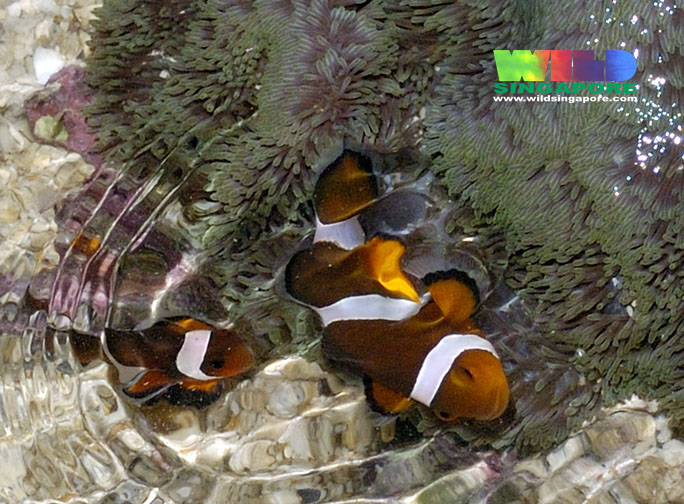
A) ROCK-FILLING OPERATIONS IN WEST KEPPEL FAIRWAY – SSD6
B) TEMPORARY HOLDING AREA IN WORKING AREA “A” (OFF LABRADOR PARK)
from PORT MARINE NOTICE No. 115 of 2008 dated 13 June 2008

The existing Port Marine Notice No. 108 of 2008 is superseded by this Port Marine Notice.

With effect from 21 June 2008 to 10 August 2008, at West Keppel Fairway and approaches to Cruise Bay, within working areas bounded by the following co-ordinates

Rock-filling works will be carried out 24 hours daily, including Sundays and public holidays, within the shaded areas of SSD-6 (bounded by Point D, A, B and E).

Working area “A”, within the shaded area of “A” (bounded by Point RF1 to Point RF8) in the vicinity of Labrador Park, has been identified as the temporary holding area for the rock-filling works.

Rock-filling Works
Rock-filling work will be carried out by tremie barge at Working Area “SSD-6”. There will be only one (1) barge carrying out rock-filling works in the working Area “SSD-6”. Tremie barge will be held in position by 4-point anchor mooring system. A safety working zone of 200-metre radius is centred at the tremie barge. Safety boat will be stationed in the immediate vicinity to warn other craft of the project work. Emergency safety tug will be stationed at all times to assist during emergency. The tremie barge will be required to shift to Working area ‘A’ where
necessary. Further enquiries relating to this operation can be directed to Mr Emir Himzari, the project co-ordinator at Tel. 9125 5998, e-mail: emir@eastmarine.com.sg.

Jun 10, 2008

Pulau Merambong: an island off Tuas

There is an intriguing island that can be seen in the distance from the Tuas shore. In the photo above, it's the island in the distance to the left of the green Merawang Beacon, which marks the natural shore spared from reclamation at Tuas.
This island is Pulau Merambong that lies on the Malaysian side of the border that cuts through the Straits of Johor. It's the yellow spot with a green surround on the navigation map above. While Merawang Beacon is the green bit sticking out of the straight-line coast of Tuas. Higher up is the Second Link.

There was recently an article in the New Straits Times about Pulau Merambong which shares a little about what can be found there.

Here's some extracts from Pulau Merambong: Fears of Singapore staking a claim
Satiman Jamin, New Straits Times 9 Jun 08
full article on wildsingapore news

For a small island, Pulau Merambong has three beaches - sandy, rocky and mangrove.

Although marine life is not as abundant as it used to be, the rare kilah or noble volute (Cymbiola nobilis) and some starfish can be found during low tide.

The kilah's sweet flesh and patterned shell are highly sought after.

It is said that seahorses and dugong used to thrive in the waters, but sightings of the creatures are rare nowadays.

A newly-painted lighthouse stands at the southeastern tip of the island. Malaysian and Johor flags perched on the tower are the only visible evidence of our country's sovereignty over the island.

Further inland, a Muslim graveyard dominates the small plains at a foothill.

Fisherman Mohd Khairul Anwar Abdul Rahman, 23, said decades ago, the folk of Gelang Patah would bury their dead on Merambong as the mainland's wild animals could dig up bodies from the graves.

The graveyard is unsafe for the barefooted as the flat, thorny seeds of the sepetir tree carpet the ground.

Sepetir (Sindora siamensis) is in the list of threatened species of the International Union of the Conservation of Nature in 2006.

On the hilltop, there are two more graves under a zinc-roof shed. The kettles and water containers in the shed suggest that people had stayed there before.

Behind the hilltop graves, more than five large holes are found in the wooded area, whose origins are linked to stories of people digging for treasures left by pirates.

Only the sandy and mangrove beaches are accessible from the hilltop.

The steep cliff with jagged rocks and mossy slippery boulders is a natural barrier to the rocky beach.

The rocky beach can be divided into three areas: the rocks and boulders underneath the cliff; the wide expanse of terraced ridges of jagged rocks; and an area of stones and pebbles carved by waves.

Snails, crabs and bivalves live in the cracks and in between rocks, only visible during low tides.

The sandy beach is made up of tiny granules of pulverised rocks, the result of waves pummelling the rocky beach next to it. Thus, the sand has the same reddish brown colour as the rocks.

A few metres from the lighthouse, at the edge of the sandy beach, rambong shrubs abound. It could have been the namesake of the island


The unique terraced rocky beach of Pulau Merambong
from Spotlight: 'Let's not lose Pulau Pisang', New Straits Times 9 Jun 08

from Pulau Merambong Waters A "Prohibited Area" For Local Fishermen
Bernama 8 Jun 08;
full article on wildsingapore news

The Malaysian government should develop the island, he said, adding that it was strategically located at the centre of shipping route to the Port of Tanjung Pelepas, Tanjung Bin power generation plant and Asia Petroleum Hub, as well as to Singapore's Tuas industrial area.

More links

Jun 9, 2008

Flying Fowl

A group of about 10 Red junglefowl were seen today, foraging on the shore and settling on a large boulder. This is a blurry photo taken with a not-long lens from a great distance away. The Red junglefowl (Gallus gallus) is the wild ancestor of domesticated chickens. Pulau Ubin is probably the only place in Singapore where you have a relatively good chance of seeing these rare birds in the wild. At Chek Jawa, large groups of 20 or more have been seen emerging from the coastal forest to forage on the beach with the outgoing tide.

As I got closer, the birds started to fly!!First one took off.Then more!
They really do fly and fly very well.It is said that these birds can fly quite a distance, for example to cross rivers, and to quite a height, spiralling upwards to the tree tops. In fact, they roost in trees.

Red junglefowl are considered vulnerable in Singapore and globally vulnerable to extinction. They are not only affected by habitat loss but also by poaching and interbreeding with domesticated chickens.

Resorts World Sentosa and sharks fins

Here's extracts of some recent comments carried in the media on the issue...

from Of sharks' fins and highrollers
liang dingzi, Today Online 5 Jun 08
full article on wildsingapore news

AS someone who abhors any form of cruelty to animals, whether inflicted out of perversion or for commercial purposes, I applaud Resorts World at Sentosa (RWS) for its decision to keep sharks’ fin off its menu when it opens in 2010. I hope other restaurants will soon follow suit.

I find the commitment, however, somewhat half-hearted and disconcerting when it was revealed that high rollers at the resort may continue to feast on the Chinese delicacy. This is clearly a case of robbing Peter to pay Paul, negating the good that would have been otherwise achieved.

Worse, it suggests that compassion is a tradeable commodity — that wealth buys the right to be above the civilised norm that is being promoted. It does not matter that the consumption by high rollers will be confined to private rooms.

To say only a small quantity is eaten in private does not eradicate the cruelty involved to the animal and also insults logic. There is no middle ground, where the supposed balance meets.

from It’s about cruelty, not profits
Letter from Dudley Au, Today Online 9 Jun 08
full article on wildsingapore news

To say only a small quantity is eaten in private does not eradicate the cruelty involved to the animal and also insults logic.

There is no middle ground, where the supposed balance meets.


from Smaller steps to a better fin-ish?
Letter from Peter Tan, Today Online 7 Jun 08;
full article on wildsingapore news

We should celebrate that 90 per cent of sharks’ fin will not be consumed at RWS, rather than lament the10 per cent that may be.


from One man’s foie gras is another man’s poison
Letter from Teo Puay Kim, Today Online 7 Jun 08;
full article on wildsingapore news

I would like to propose the banning of the French delicacy foie gras in Singapore. We should be writing to all French restaurants to remove this distasteful dish that involves a high level of cruelty to ducks and geese.

Compassion is not a tradeable commodity :—: we should be fair to the ducks and geese as well.


from Resort's shark's fin ban 90% effective
Reply from Resorts World Sentosa, Straits Times Forum 5 Jun 08
full article on wildsingapore news

WE REFER to Mr Ace Kindred Cheong's online letter yesterday, 'Shark's fins menu: Why the double standards?', penned in response to Resorts World at Sentosa's (RWS) decision not to have shark's fin on the menu when we open in 2010.

First, we are glad to have another supporter for the shark conservation cause. RWS decided last year that we would not want to have shark's fin on the menu in order to advance our message to protect the oceans.

It is a bold decision for any casino resort to take, given that the majority of customers to global casinos are Asians, for whom delicacies such as shark's fin soup is a popular item at banquets.

RWS' final decision carries the concession that an exemption will be made only in the private gaming rooms, only upon request, and only if the customer rejects similar quality alternatives on the menu.

We recognise that this policy is a compromise, not the ideal, and open to criticism. Nevertheless, we are consoled by the fact that having the dish removed from menus effectively does away with at least 90 per cent of any shark's fin that could have been consumed on the premises.

We had to contend with a piece of business reality, but we believe that taking the first step to make a difference is better than not moving at all.

RWS' hope is that, somewhere down the road, we could report that we have not had to serve up a single bowl of shark's fin at the resort, for as long as shark finning remains unsustainable. To do that, we would need all the help from conservation supporters like Mr Cheong. You could help us convince the unconverted.


More links
  • Sentosa IR says ‘no’ to shark’s fin
    Original press release and media reports on wildsingapore news

Jun 8, 2008

Zoanthids of Cyrene Reefs

At a very civilised hour of 7am, we're off to Cyrene Reef with Dr James to look at zoanthids.

On the way out, Yi xiong spotted two dolphins! But there rest of us were asleep or not paying attention and missed them :-(Here are the intrepid explorers making the amphibious landing.Dr James is really cool and fun to have on our trips!

As soon as they arrive, they find a special zoanthid that Dr James first saw at the Galapagos!I don't have photos of the zoanthid because I was then still on the big boat :-( But I'm sure someone on the team will blog about it soon.

By now, we are a little better at zoanthid ID.

Zoanthus species are smooth as they don't incorporate sand in their bodies.Zoanthus vietnamensis usually (but not always) has a pink centre when it's closed and is larger than Zoanthus sansibaricus. When opened, the oral disk can be green or other colours.Here's another patch of probably Zoanthus vietnamensis.And yet another patch of probably Zoanthus vietnamensis.

Zonathus sansibaricus tends to be smaller and have relatively longer tentacles.Palythoa mutuki has a much larger oral disk and relatively short tentacles. It incorporates sand into its body so it feels rough to the touch. But be careful and don't put your finger into your mouth or your eye after touching it as these may contain toxins.This is a typical Palythoa mutuki.But Palythoa mutuki can also have a plain oral disk as well as other patterns.

To make matters more complicated, the various zoanthids are often found crammed next to one another. Here are some possible IDs of various combinations of these zoanthids.Green Zoanthus vietnamensis on the left and brown Palythoa mutuki on the right.Big brown Palythoa mutuki among smaller Zoanthus vietnamensis.
Smaller light brown Palythoa mutuki and bigger dark coloured Playthoa mutuki among paler Zoanthus vietnamensis.
Big brown Palythoa mutuki among much smaller Zoanthus sansibaricus both carpeting the ground under seagrasses at Cyrene.

Many intertidal zoanthids also contain symbiotic algae (zooxanthallae) that undergo photosynthensis. So they also need sunlight. In the seagrass meadow, they are kind of like the understorey of the mini-forest. Dr James says there might be so many zoanthids on Cyrene Reef's seagrass meadows because the water there is clear, thus allowing sunlight to reach the zoanthids even under the seagrasses.

For animals that need to cling to a hard surface and get sunlight, real estate has a high premium.So zoanthids crowd next to one another and with sponges and other encrusting animals on the rocks and rubble of Cyrene.Here's a carpet of two kinds of zoanthids (on the left) crowding next to a brown sponge on the right. It's a slow and silent constant battle for territory on the shores of Cyrene.

Some other animals are sometimes also mistaken for zoanthids.The pink animals on the right are the big polyps of a hard coral, Turbinaria sp. While the brown Zoanthus mutuki is on the left.

Sometimes confused for zoanthids, are corallimorphs.Corallimorphs are solitary polyps, although they are often found in groups and may sometimes carpet large areas of coral rubble. Most corallimorphs don't have long tentacles and instead have bumps or other small projections on their large oral disk. Corallimorphs are distinguished by an upturned mouth in the centre of the oral disk.

The Anemone coral (Goniopora sp.), a hard coral, also has large long tentacles that are sometimes mistaken for zoanthids.Another animal that is often confused for zoanthids are these fluffy ones.Dr James says they are Briareum species, a kind of soft coral. Wonderful! I've always wanted to know what they were.

We saw lots of other interesting marine life on Cyrene as well. I'm sure the others will blog about these soon.

For me the most intriguing encounter was with this Cake sea star look-alike.When we first saw it (photo on the left) it certainly resembled a Cake sea star (Anthenea aspera). When we looked at the underside, it became obvious that it was a Cushion star (Culcita novaeguinea).We put it in water and it looked a little more like a Cushion star, although it was really flat for one. We think it might be a juvenile Cushion star.

Alas, throughout the trip, there was a small boat laying large fish traps around the perimeter of Cyrene Reef.The fish traps are really huge!
Otherwise, today was a really pleasant day out.The ominous phalanx of marching clouds earlier seen when we started the trip loomed over us all morning, heavy with moisture. But there wasn't even a sprinkle and they kept the day cool and pleasant.As usual, we squeak back just before the incoming tide. All thanks to Melvin who valiantly brought us to Cyrene despite having other business to attend to at the same time. (We also secretly think it's Melvin who gives us the good weather).A final photo of Dr James, the coolest zoanthid guy, with the lovely Liana, before we head of to replenish on prata of various subspecies.

Hairy sea hares

There were hairy sea hares on some patches of Cyrene Reef seen on Friday and today. At first glance they may appear to be the same, but a closer look suggests that there are two kinds of hairy sea hares out there today.
One kind is really 'hairy' with long projections all over. This is Bursatella leachii that is sometimes seen in huge numbers on Chek Jawa and our other northern shores. They are seasonal and shortly after an explosion of numbers, they are often not seen again for many months.Like other sea hares, it has two pairs of tentacles, oral tentacles (in front of the mouth) and rhinophores on top of the head. But these tentacles have hairy projections and are thus hard to distinguish from the rest of its hairy body.Bursatella leachii has blue spots on its body that sometimes form 'eyes' (with a dark centre) and patterns of small dots. The 'hairs' tend to be large, often flat and rather long.

The other hairy sea hare has shorter 'hair'.Its oral tentacles and rhinophores are more obvious as the hairy projections on them are not so long.Its body pattern comprises tiny blue dots and small spots and fine lines. The 'hairs' tend to be short and conical.This sea hare is possibly Stylocheilus sp. I have not seen it as often as Bursatella leachii. It too seems rather seasonal.

Both sea hares produce a red dye when they are stressed. They are well camouflaged among seaweeds and seagrasses, so please watch your step. If you see a red dye, it means you might have injured one.

Jun 7, 2008

Zoanthids of Changi

6am and we're at Changi with Dr James and the Zoanthid Team. We had hoped to bring Dr James to another Northern shore but there were complications and Changi was the best alternative.

Wow, we find large patches of what is possibly Zoanthus vietnamensis, due to the bright "Hello Kitty" or "Bandung" pink.We also come across some green ones which Dr James will take a closer look at.Alas, there weren't any other kinds zoanthids to be found. But the shores are definitely alive with all kinds of other marine life.

There were lots of sponges.A prickly purple one that I haven't seen for some time.And lots of this pretty bright pink one.

There were also lots of hydroids (Order Hydrozoa) on the shore. Hydroids may look like plants but they are actually animals. More correctly, a colony of tiny little animals.This pale feathery colony gives a very nasty sting. I brushed my hand accidentally against one and ouch, it really hurts.This orange one grows in bushy tufts on hard surfaces. We didn't test whether it stings.
And here's a dark orange one that might be hydroid, or something else altogether. I have no idea.

There were also lots of sea fans (Order Gorgonacea) or gorgonians on the shores! How nice to see them back in force.
There were bright red ones with skinny long branches.And colourful orange ones with thick branches. Sea fans are also colonial animals made up of tiny little polyps.Here's a closer look at the tiny white polyps that make up this orange gorgonian. The polyps are supported by a central rod made of a tough but flexible protein called gorgonin that is similar to the material produced in the horns of animals.
There were lots of these little antennae like colonies.
There were white ones too with star-shaped openings where the polyps had retracted.
Gorgonians provide places for animals to live, like this tiny hermit crab clinging to a small gorgonian. Today, however, we didn't really see any of the ovulid snails that are often found on the sea fans, as we were busy looking for zoanthids.

And one strange colonial soft coral.I don't really know what this is.

This may look like zoanthids,But they are hard, and indeed, they are hard corals. Dr James says they are Tubastrea sp., a kind of coral more commonly found in caves as they don't need sunlight like most other hard corals.

The tide was really low today and we found that the shores were covered with lots of relatively large colonies of Zebra coral (Oulastrea crispata)!All this life means there's things for other animals to eat and places for them to shelter.

Chay Hoon found another Hypselodoris sp.But only one this time.

Sijie also found some Crown sea stars (Asterina coronata), and there were the orange sea cucumbers with dark stripes, purple sea cucumbers that cling to rocks and one Thorny sea cucumber (Colochirus quadrangularis). There were also a few short-spined black sea urchins (Temnopleurus sp.) . The hard surfaces were covered with all kinds of life, including large swathes of Green mussels (Perna viridis).

Among the living garden of hydroids and gorgonians was this orange sea horse!And Chay Hoon also found a large feather star or crinoid.A closer look revealed a brittle star on it.We're not sure if this is the kind of brittlestar that lives with feather stars. Or perhaps it just accidentally ended up on the feather star.

The exciting trip was cut short with incoming wet weather. Fortunately, we were spared the deluge that hit poor Kok Sheng and his sand star team at Pasir Ris. We were safely at breakfast when the rain finally reached us.

Looking forward to a final day of zoanthid hunting tomorrow!

Jun 5, 2008

Zoanthids of Pulau Hantu

5am and we're back on the shore with Dr James, this time at Pulau Hantu.We find more examples of the zoanthids we saw yesterday at Kusu Island.

There is Palythoa tuberculosa that looks like a rubber mat and coats rocks and rubble. This zoanthid can take on different forms. Some are smooth and unfragmented.
Others are highly fragmented and look almost like pomelo segments! Dr James confirmed that this zoanthid does sometimes purposely break off pieces that are washed away and eventually settle down to start a new colony. It is believed that they mostly reproduce asexually (by division or just expanding the colony). In fact, there are problems in understanding how zoanthids reproduce sexually.
They also come in different colours, some have tinges of other colours such as green.

These zoanthids include sand in their bodies and feel a bit rough to the touch. Dr James elaborated that the sand grains are actually incorporated into the body and not stuck on the outside. Different species of zoanthids may select different sizes of sand grains.

Dr James shares that not every colony of this zoanthid is toxic. Some may have the toxin and others may not. The toxin is being studied for applications in human medicine.

This is another Palythoa species, Palythoa mutuki. Unlike the rubber mat zoanthid, these have more distinct body columns.But they too have a shared base of tissue, as you can see from the close up in the photo on the right. When they are out of water, the tentacles are tucked into the body columm.When submerged, you can see the broad oral disc fringed by short tentacles.
The polyps may be closely packed against one another.And come in different colours. This clump was found near a mangrove tree!

This is a Zoanthus species, those we saw were mostly Zoanthus sansibaricus.These zoanthids don't include sand in their bodies so the surface is smooth to the touch.Here's a closer look at the much smaller polyps.The Zoanthus polyps are also embedded in a common tissue, although this is sometimes hidden by a layer of sand or sediments.

As we looked for zoanthids, we came across other marine life that resembled zoanthids.Zoanthids often crowded next to other kinds of marine life such as sponges, hard and soft corals. This Palythoa tuberculosa is growing next to a brown sponge that, at low tide, looks very much like the zoanthid colony.Here's a close up of the sponge on the left photo, and the zoanthid on the right photo.

The Goniopora hard coral also resembles zoanthids.Its polyps are also a circle of short tentacles on a long body column.But a closer look will reveal the hard skeleton (photo on the left).

Here is another ball of Goniopora hard coral.Another hard coral that looks like zoanthids at first glance is the Galaxea hard coral.A closer look will reveal the hard skeleton that form tall tubes.

And here's a hard coral that looks like Palythoa tuberculosa at first glance.A closer look reveal the hard skeleton that is in the shape of small mounds. The polyps emerge as tiny flowers in the centre of the hard mounds. This hard coral is probably Astreopora sp., a member of the Family Acroporidae.

In the silty sand, there are sometimes tiny sea anemones.That may be mistaken for zoanthids as they grow close to one another. But closer examination will show that they are not connected to one another like zoanthids are.

We also showed Dr James this intriguing colony of animals. I've seen it sometimes on our shores.It's not a zoanthid and Dr James thinks it might be a hydrozoan. Wow! There's really a lot more that we can learn about our common marine life.

As we looked for zoanthids, we also came across many amazing reef animals. Kok Sheng has shared all the spectacular finds on his wonderful creations blog. So I'm just going to highlight a few.

At first mistaken for a mantis shrimp, this creature is a Ghost shrimp (Glypturus sp.)It is very rarely spotted and Dr James says it's a "Hantu Shrimp". Wow, he also speaks Malay. I'm very impressed.

There were lots of fishes in the pools left behind on this very low tide. Including this very pretty filefish.I don't know what kind of filefish it is.

And along the reef edge were these spectacular balls of spines! Diadema sea urchins usually have all black spines. But this has white spines and some spines that are banded!Another one further down had long black spines but short pale spines!Wow, I wonder what they are?

We did quite a long circuit of Pulau Hantu as the tide was very low and long. Pulau Hantu's shores are magnificently alive although they are right next to the major industrial installations on Pulau Bukom and Pulau Busing.

Other blog entries about this trip
Zoanthid hunt at Hantu on Kok Sheng's wonderful creations blog.

Jun 4, 2008

Zoanthids of Kusu Island

4am and we're at Kusu! This time with Dr James Reimer, a zoanthid expert who is with the very cool sounding JAMSTEC (Japan Agency for Marine-Earth Science and Technology).Dr James is a great person to be with out in the field. Although he just arrived in Singapore a few hours before, he was bright and cheery and delighted us with all kinds of insights about our zoanthids.

What are zoanthids?

Zoanthids look like tiny sea anemones with tiny tentacles on a tiny oral disk supported by a tiny body column. But while sea anemones are solitary polyps, most zoanthids live in colonies like corals do. But zoanthids don't produce a hard skeleton like the hard coral colonies. Instead, their skin is leathery.

Each polyp has a smooth, flat oral disc with short tentacles, usually in two rows close to one another. When they are out of water, the tentacles are tucked into the body column so that the zoanthid may look like sausages or blobs. Dr James says he prefers to see them with their tentacles expanded to have a better idea of what they are.Zoanthids may have three different living arrangements. Each zoanthid polyp may be solitary but located near one another. These polyps are large with thick, fleshy polyps on tall columns. Or the zoanthid polyps are joined one another in the colony by stolons (tube-like structures that spread across the ground like a root or runner).

On one part of Kusu Island, the shores are thick with zoanthids. We are glad that Dr James finds this area interesting. They are mostly two diffent kinds of zoanthids.These small ones are Zoanthus species also sometimes called Button zoanthids. They can come in many different colours and patterns. Dr James says these generally don't incorporate sand in their bodies so they are smooth to the touch. He also said that although in the past, they were assigned different species by their shape, DNA studies show that many are actually the same species. The most commonly seen species on Kusu Island were Z. sansibaricus.
The bigger brown ones are Palythoa species (although previously called Protopalythoa, Dr James says DNA studies show that they are Palythoa). And most of them on Kusu's shores were Palythoa mutuki. Dr James says some of these incorporate sand into their bodies so they are more rough to the touch.

In some zoanthid species, the polyps may be embedded in a common, shared mat of tissue. The tissue may be strengthened by incorporating sand. The colony may form mats on the sand or encrust rocky areas. Like these Palythoa tuberculosa, which I call the Rubbermat zoanthid...haha.Here you can see some of the polyps open in the portions that are submerged.Dr James is quite intrigued to find many of these Palythoa tuberculosa on Kusu Island with 'fractures'. Each clump is actually a colony which might be clones of one another.Here is a comparison of the various kinds of zoanthids, with a 'fractured' Palythoa tuberculosa.

The shape of the same zoanthid species may vary depending on where they are found. Those inhabiting areas with strong waves tend to be short and hug the surface. Others found in deeper, calmer waters are taller, with longer tentacles. One the advantages of being a blob is to be able to take on different shapes.

Dr James found these other species of zoanthids quite interesting.He will have to study them more closely to determine exactly what they are.Some zoanthids contain powerful toxins to protect themselves against predators. The most toxic marine poison, palytoxine, was discovered in a zoanthid. Minute quantities of palytoxine can paralyse and even kill.

So we are careful not to handle zoanthids with open wounds on our hands or touch our mouth or eyes after handling them. However, some animals have adapted to the poison and even eat zoanthids. These include the Hairy crab (Pilumnus sp.). Dr James says he has seen them eating zoanthids.

Most of zoanthids feed on plankton, some also feed on finer particles. Many harbour zooxanthellae (symbiotic algae) inside their bodies. These carry out photosynthesis and may contribute nutrients to the host polyp. Dr James shared that his studies show the same species of zoanthids may have different kinds of zooxanthallae. But zoanthids also capture and eat food from the water. Dr James said some zoanthids he kept for study ate salmon!

We saw this poor Palythoa tuberculosa that was sick.The white portion is spongey and soft and rotting. Dr James says zoanthids can also bleach just like corals as they lose their zooxanthallae. As such, they are a good indicator species as they tend to be more sensitive and bleach before the hard corals do. However, bleaching in zoanthids is not as obvious as in corals. The only way to be sure is to monitor a bunch of zoanthids to observe changes in their colour.

Some photos and ids shared by Dr James can be seen on the CoralPedia website

Along the way, we also spotted many other creatures on this rich but narrow reef at Kusu Island.

For some reason, there were lots of cowries out and about this morning.I saw this Wandering cowrie (Cypraea errones) which I usually encounter more often on our Northern shores.
We saw two of these beautiful Onyx cowries (Cypraea onyx). This cowrie is listed among the threatened animals of Singapore due to habitat loss and over-collection and is rarely seen.And we also saw an Arabian cowrie (Cypraea arabica)! This large cowrie is rarely encountered and is also listed among the threatened animals of Singapore due to habitat loss and over-collection.

Dr James shared that in Japan, there are some times of the year when the villagers go out and collect cowries as they appear in numbers. Wow, could there be some Cowrie Event this morning that we still don't know about?

Another interesting snail is the Spider conch (Lambis lambis) which are still commonly seen on our reefs, although it is also listed among the threatened animals of Singapore.This one had an orange design on the inside of the shell. The animal is using its long muscular foot tipped with a knife-like operculum to turn itself back the right way.I also saw this lovely flatworm (Pseudobiceros fulgor) which I have not seen for many years.
And Chay Hoon spotted this well camouflaged Spotted-tail frogfish (Lophiocharon trisignatus)! Although it was quite large, it blends in perfectly with its surroundings and thus requires an eagle eye like Chay Hoon's to spot.

We also saw octopus, clown anemone fish and of course lots of hard corals and soft corals and the other amazing marine life on this little island.

All too soon, it was sunrise and the tide came in.Here's Dr James in green shirt having a last look at the zoanthids on Kusu Island before we break off for breakfast.

Looking forward to our trip tomorrow, in a few hours, to check out the zoanthids on Pulau Hantu!

(This entry is really late because yesterday, my desktop died. Then my backup laptop actually caught fire -- well it was smoking! Normality resumed just two hours ago. And only made possible thanks to Victor Ang, my PC Angel, who delivered a replacement laptop within 24 hours. Thank you Victor!)

7 Jun (Sat) Talk about Cyrene and our shores

In commemoration of World Environment Day, Transitions Optical and the Naked Hermit Crabs are pleased to present an exhibition of posters and pictures of Singapore’s shore life, from 6-8 June, at the National Library.

There will also be a free public talk on 7 Jun (Sat) by Ria Tan on "The Naked Truth: See Our Shores in a New Light"

There is much beauty and wildlife in Singapore’s shores. But there is a fragile balance that is all too easily disrupted. So many things can go wrong – beginning from ‘small’ things like littering to major construction projects – and that beauty is lost. Forever.

Through 300-600 recent photos, Ria will share and stories of adventures and discoveries on our living shores.

With a special focus on Cyrene Reef! more about this reef

Nemos, sea snakes, living corals and more! From Changi to Tuas, Sentosa to the Sisters Islands, and beyond.

Ria will also share about some of the threats to our shores, and how ordinary people CAN make a difference.

For a sample of the photos in the talk, see the wildsingapore flickr site

All are welcome!

Transitions Optical, the world leader in the manufacturing of plastic photochromic lenses is pleased to support The Naked Hermit Crabs. Just as Transitions lenses help protect eyes from the sun’s harmful UV rays and glare, the mission of The Naked Hermit Crabs is to protect our threatened shore-life. The group’s mission is to alert the public to the diverse marine life and natural beauty on our shores, and enlist their help in their protection and preservation. The Naked Hermit Crabs actively conduct talks and free excursions for the public, much of it funded by the members themselves.

Time of talk: 3pm
Venue: The Plaza, The National Library, 100 Victoria Street.
Website: http://www.wildsingapore.com/places/cyrene.htm
Contact: Ria at hello@wildsingapore.com

Jun 3, 2008

Pasir Ris Bliss: Stars!

3am and I'm on Pasir Ris alone. It's my first time on this shore but have heard from Kok Sheng that there's lots of sand stars there. My job this morning is to take photos of them and their measurements. And wow! There sure were lots of sand stars!They came in all kinds of colours, in various sizes,And all kinds of patterns too.Sand stars belong to the genus Astropecten. We're not sure if the one with the pretty patterns on the arms are a different species from the plain ones. It takes close study by scientists to sort out issues of species. So I'm glad Kok Sheng is on top of this question.

The sand star has large flat spines along the sides of the arms. There are also large squarish plates on the sides of the arms.The upperside of the body is covered in tiny patches of bristle-like structures. The white spot is the madreporite; water is sucked into the sea star through this seive-like structure. The mouth is on the underside with grooves along the arms, through which emerge pointed tube feet.

Some of the sand stars had little white snails on them.Even tiny sand stars like this one. Which is why the snails looked relatively large. I believe these are parasitic snails. I'm sure Kok Sheng can tell us more later on. I've seen these snails on the sand stars at Changi as well.

While most sand stars have five arms, there are some with four arms. Elsewhere, I've seen them with six arms too. Here is a four-armed sea star in the little measuring tray that I used to take quick photos of them before returning them.Alas, today, I saw many sand stars with broken off arms. Otherwise, though, they seemed healthy. They did not have 'rotted' wounds or lesions or other signs of disease.

Sea stars can purposely drop off an arm if they feel threatened. This is how they might escape a predator that has chomped on an arm. Or if a stone happens to roll onto an arm.

For this reason, those of us studying stars should NEVER pick up a sea star by the arm. Even big ones like the Knobblies. We should gently lift them by the central disk.After taking their measurements, we should quickly put them back where we found them.

Unless there is a good reason for doing so, it is best not to touch sea stars, especially not to remove them from the water. Taking photos with them out of the water is not a good way to promote care for our shores. Those of us who love our shores should avoid doing this and avoid encouraging people from doing this.

I took measurement of nearly 40 sand stars! I stopped after heeding the protestations of my aged knees and back. So sorry Kok Sheng.

There were also other stars on the shore (which was sprinkled with large rocks), including several Crown sea stars (Asterina coronata).
And I came across one medium sized Cake sea star (Anthenea aspera). How nice to see this star on a rather silty shore.There were also other echinoderms. A few buried ball sea cucumbers (Phyllophorus sp.), and black sea urchins (Temnopleurus sp.). LOTS of black sea urchins!This gathering of very many sea urchins stretched all the way out into the deeper waters!We've seen this sort of gathering of black sea urchins on Changi as well. But it has been a long while since I've come across such a gathering.

The black sea urchin has short black spines. And tends to 'carry' things such as bits of shells, dead leaves, seaweeds and other debris.
Like other sea urchins, the mouth is on the underside. The black sea urchin often has a long banded worm-like thing curled around its mouth. I've seen this several times also on the black sea urchins on Changi.
Quite creepy actually! I have no idea what the worm-like thing is or what its relationship is with the host sea urchin. Yet another mystery that needs more study!

Pasir Ris Bliss: more critters!

Besides stars and urchins, the Pasir Ris shore was also alive with all kinds of other animals!Under the scattered stones and rocks there were octopuses! I saw two of them, but just their arms sticking out from under a large rock. They seemed quite large and appeared to be the kind that we see on Changi, rather plain and smooth, unlike the more colourful ones we see on our Southern shores. The tide was very low so they weren't out hunting.

What was out hunting though, was this Tiger moon snail (Natica tigrina).Moon snails love to eat button snails. I looked and I looked (because Kok Sheng is interested in them) but didn't see any button snails, not even on the small sand bars nearer the low water mark.

The shores were lively with Flower crabs (Portunus pelagicus) of all sizes, and I saw this large Moon crab. The old scientific name of this crab is Matuta lunaris and now more and more people refer to it as Ashtoret lunaris. Here's some details from the stunning Systema Brachyurorum Part 1 by Peter Ng et. al (2008) in The Raffles Bulletin of Zoology, "an increasing number of workers have chosen to recognise ... Matutidae and Calappidae as two taxa as distinct families ... Until more work is done, we take the somewhat more conservative approach and keep the Matutidae and Calappidae in one superfamily, Calappoidea."

Quietly having little parties in small groups of two or three were lots of tiny little hermit crabs.These are probably the Tidal hermit crab (Diogenes sp.). There were not that many Striped hermit crabs (Clibanarius sp.) unlike at Changi.

Another cuddly couple was this goby and snapping shrimp!Some gobies live together with a snapping shrimp in its burrow. The more keen-eyed goby keeps a look out for danger and annoyances (such as shore explorers). Meanwhile the short-sighted snapping shrimp does the house-keeping on the burrow like a little bulldozer. It was dark and I guess they don't equate a weak torchlight with danger. But after this flash photo, they both disappeared into the burrow in a flurry of sediments.

The pools were thick with tiny little gobies. There were the usual Brown shore gobies (Drombus triangularis) and Shadow gobies (Acentrogobious nebulosus). But here is a pretty goby with little red spots whose name I don't know. Lacking a name doesn't stop us from admiring it.

Worms might seem icky to many, but I find marine worms quite fascinating.These fluffy worms with a double fan in trendy pink and black belong to the Phylum Phoronida. The phylum has less than 20 species! That's a really small phylum. Consider that fishes, birds, gorillas, us all belong to one Phylum Chordata. These Phoronid worms are often found with Peacock anemones (Order Ceriantharia) and indeed, this bunch was found near the bottom of a Peacock anemone that had retracted into its tube.

While bending over to take photos of sand stars, I noticed this colourful tube worm making a quick foray outside its tube.Isn't it pretty?! With iridescent body and feathery gills. OK, we got to ignore the scary tentacles on the head.

And here's a bunch of stuff sticking out of the sediments. I see this all the time and still haven't got a clue what they are.Probably the tentacles of some sort of worm. I also saw a short and small ribbon worm (Phylum Nemertea) with stripes, and of course, lots of bristleworms.

But the shore was truly teeming with tiny little sea anemones of all kinds.Thanks to having to keep bending down to measure the sand stars, I got a good look at them, even these very tiny ones!And there were two of these beautiful large sea anemones that I've not seen before. They had a inner ring of intriguing lobed structures.
I've seen something similar, but these were transparent with white markings and seen near mangroves at Kranji and at Sungei Buloh. We must bring Dr Daphne to Pasir Ris when she's next in town!

The short stretch of Pasir Ris that I went to today was mostly soft and silty with scattered rocks and stones. There wasn't much on the stones aside from a sprinkling of sponges and some seaweeds. Although there were a few tiny patches of hard corals!
This is Zebra coral (Oulastrea crispata) that is often seen on our Northern shores, but in tiny colonies.

There were also few small patches of Spoon seagrass (Halophila ovalis) with big green leaves, like the kind we see at Changi.There's much more of the shores to explore on Pasir Ris, and we must certainly find some opportunities to do so.

5-15 June: Cyrene and our shores featured on RE-live! @ Atrium

The Naked Hermit Crabs will be setting up a booth at the Double A RE-live! @ Atrium environmental carnival. With a wide range posters about Cyrene and our other living shores.

More about Cyrene Reef on the wildsingapore website.
Bring your friends and family!

Join the many exciting events organised at the carnival!

The carnival aims to engage the public on the importance of leading a more environmentally sustainable lifestyle, and to drive the public to RE-think and RE-live their existing habits. Some of the highlights of the event are:
  • AIBI Bike-a-thon: Reduce your carbon footprint! Be part of a record breaking event!
  • The Green Mile: Join us in this walk to make your stand!
  • Eco Trail: Discover the environmental groups in Singapore
  • Palmessages: Pledge to RE-live!
  • Launch of Engage! Roadshow: Learn the realities of eco-living
  • Bazaar: Sale of eco-friendly products from 5th to 20th June
  • Exciting stage events!: Snakes and Ladders, Guess!, and Handicraft Competition. Attractive prizes to be won!
Time:12noon – 9pm
Venue: Atrium@Orchard (outside Dhoby Ghaut MRT/Plaza Singapura)
Website: relive blog and Facebook event
Contact: relive@eco-singapore.org

Jun 2, 2008

Master Plan 2008: comments in the media

From articles in the media on 2 Jun

YouthInk writers share their thoughts on the URA Master Plan unveiled recently
Straits Times 2 Jun 08;
full article on the wildsingapore news blog

Go natural

LEISURE parks here need not necessarily have to be man-made.

We can embrace what we already have, Singapore's surrounding islands - Kusu, St John's, Sisters and Pulau Ubin.

Getting away from the concrete jungle is one of the most refreshing things one can do.

These islands are full of history and serenity. Singaporeans get the chance to enjoy the boat ride, clean air and, of course, fresh seafood.

The authorities should keep Singaporeans abreast of current developments on some of these islands.

In addition, they could enhance existing attractions on the islands by including hiking and walking trails, or offering ranger services.

These add value to time away from the city and also encourage a healthy lifestyle and an appreciation for Singapore's history.

Heighten the awareness of these islands to provide Singaporeans with more options to relax and enjoy life away from the fast lane.

Tabitha Mok, 21, is a fourth-year medical student at the University of Western Australia

Is the URA's Leisure Plan a good idea?

Is the Urban Redevelopment Authority's Leisure Plan a good idea? What do you like most about it and what would you change or add
Business Times 2 Jun 08;
full article on the wildsingapore news blog
Tan Tiong Cheng
Managing Director
Knight Frank

URA has cleverly crafted the Leisure Plan by turning our weaknesses into strengths. We are a small island limited by physical size. Yet when fully developed, we will have a 150km route for joggers and cyclists, 4,200ha of parks connected by a web of 300km tracks, and 24/7 urban entertainment and lifestyle hotspots.

We are a city - yet the countryside of farms and marshes is at the door-step. I am impressed that every square centimetre of land is fully utilised.

Perhaps the only area left out of the Leisure Plan is the Southern Islands of Kusu, Lazarus, Seringat, Sisters and St John.

The Leisure Plan will meet the needs of citizens, residents and visitors. It is a strategic piece of the jigsaw puzzle to make Singapore a unique place to live, work and play. The vision and objectives are bold and I look forward to its implementation.